
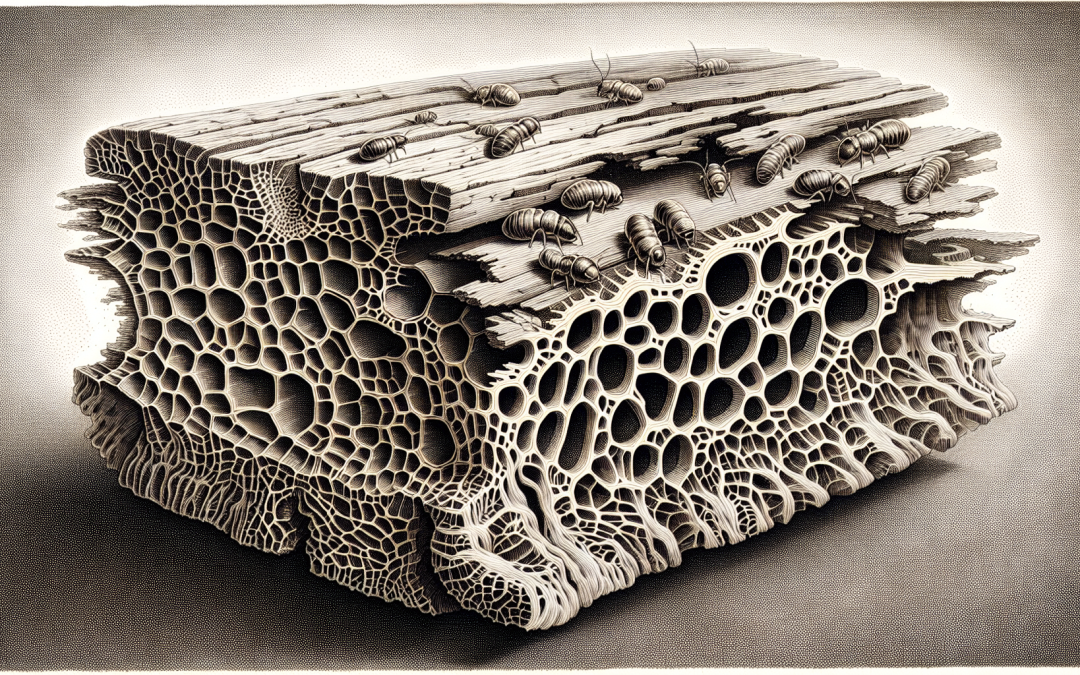
The most common signs of termite damage are mud tubes on foundation or basement walls, piles of shed wings near windows and doors, wood that sounds hollow or gives way when you press it, and paint that bubbles or cracks over damaged wood. Subterranean termites rarely come out into the open, the EPA notes, so many people don’t know they have them until they see a swarm or find damage during construction work.
That’s why these signs matter. Termite damage is usually the result of years of feeding, according to Penn State Extension, so the earlier you notice the signs, the less wood you replace.
Are those mud tubes?
Mud tubes are the most common sign. They’re tunnels of soil about as wide as a pencil, running up foundation walls, basement walls, posts, studs and door or window frames. Penn State explains that termites build them as protected runways from the soil to wood. The University of California calls shelter tubes the most commonly seen evidence of a subterranean termite infestation.
To check if a tube is active, break off a small piece and look inside. Moist soil and live termites mean an active infestation. Dry, crumbly soil suggests old activity, according to Missouri Extension.
Are those wings on the windowsill?
Piles of small, see-through wings, all the same size, are a classic sign. Termite swarmers fly out in spring, in New York from about March through June, according to Cornell Cooperative Extension of Nassau County, and they head for light, so they end up at windows and doors. Then they drop their wings. Penn State says shed wings are often the only sign homeowners ever see. Make sure they aren’t flying ants.
Why does the wood sound hollow?
Termites hollow out wood from the inside, so the surface can look fine, Penn State notes. Tap wood near the soil, like sill plates, basement stairs, posts and baseboards, and listen for a hollow sound. Then press it with a flathead screwdriver, as the EPA suggests. Damaged wood gives way easily. Inside, termite tunnels run along the grain and are often lined with mud, according to Texas A&M AgriLife Extension.
Why is the paint bubbling?
Paint that bubbles or cracks over wood can mean termites are working just under the surface. It can also be a plain leak, so check the wood underneath before you repaint.
What about sagging floors or sticking doors?
Those are later signs. Penn State notes that termites hollow out joists, subflooring and studs, and that where an infestation is extensive, flooring and wall framing can be damaged. Floors that feel soft or sag near a wall are worth checking. By then, you’ll need repairs as well as treatment.
How quickly do termites damage a house?
Slowly. Penn State and Cornell Cooperative Extension both say it usually takes termites years to cause serious damage. Penn State adds that problems often show up 10 years or more after a building goes up. That’s good news if you catch the signs: you have time to get a proper inspection and a plan. It’s bad news if you ignore them, because the colony doesn’t stop.
Here’s a simple example
Say you’re repainting a basement door frame in an older house in Brooklyn. The paint has a few blisters near the floor, and when you scrape it, the screwdriver sinks into the wood. Behind the trim you find tunnels packed with dirt, and there’s a thin mud tube running up the concrete wall nearby. That’s termite damage, and the mud tube is the route. The fix is treating the colony, replacing the damaged trim and framing, and finding the moisture that drew them in.
What should I do if I see a sign?
- Don’t knock down every tube or spray what you see. It won’t reach the colony, and it makes the activity harder to find.
- Take photos and note where you saw each sign.
- Check for moisture, like leaks, damp corners and wood touching soil.
- Get an inspection. Once a year is a good rule for buildings, and sooner when you see any sign.
NYC Extermination’s termite inspection is free. We check the foundation, basement, crawl spaces, framing and any wood near the soil, confirm it’s termites, and see how far the damage goes. See our termite control service, read how to get rid of termites and our termite prevention checklist, or call (347) 988-2315.
Frequently asked questions
What does the start of termite damage look like?
Usually a thin mud tube on a foundation or basement wall, a few shed wings on a windowsill in spring, or a spot of wood near the floor that’s soft when you press it. Early damage is hidden inside the wood, so the outside often looks fine.
Can you see termite damage from the outside of the wood?
Often not. Termites hollow out wood from the inside, so the surface can look normal. Tapping and probing with a screwdriver is how you find it.
Are termites a problem in NYC apartment buildings?
They can be. In a building, termites are a structural problem, not just a pest problem. Older buildings with wood framing, damp basements, crawl spaces and wood near the soil are most at risk, so basements, boiler rooms and the wood near the foundation are where to check.

Recent Comments