
If you’re dealing with birds causing damage to your property or crops, you’re likely asking, ‘what is the best bird exclusion netting?’ This article will answer that question by guiding you through the top options, key factors to consider, and the pros and cons of different types of bird netting. By the end, you’ll know exactly which bird exclusion netting suits your needs best.
Key Takeaways
- Bird exclusion netting is a highly effective and versatile tool for preventing bird-related damage in various settings, including agricultural, commercial, and residential areas.
- Key factors in choosing the right bird netting include mesh size, material durability, and compatibility with local climatic conditions to ensure long-term effectiveness and stability.
- Heavy-duty bird netting is ideal for permanent installations, offering robust protection against harsh conditions, while lightweight garden netting is suitable for seasonal use, providing an easy-to-handle solution for protecting crops.
1 Understanding Bird Exclusion Netting

Bird netting is a tried-and-true method within the bird control industry, offering a reliable way to prevent birds from entering areas where they can cause trouble. It’s a straightforward yet ingenious bird control solution that creates a physical barrier between the birds and the areas you wish to protect. Whether it’s a lush vineyard ripe with grapes or a rooftop that’s become a favorite roosting spot, bird netting works to keep birds out without causing them harm.
The versatility of bird netting is unmatched. It can be used to address seasonal nuisances or deployed as a permanent fixture in commercial settings. For instance, pigeon netting is renowned for its efficacy in deterring pigeons from nesting and roosting on buildings, while garden netting provides seasonal protection for your plants and crops from smaller, pesky birds. Moreover, bird netting is not just about keeping birds away; it’s about preventing the subsequent bird damage that can lead to significant economic losses.
As someone who has witnessed the effectiveness of bird netting firsthand, I can attest to its role as a critical tool in bird control. It’s not uncommon to hear success stories from property owners who have seen a drastic reduction in bird-related damages after installing bird netting. The satisfaction of a pigeon-free facade or a bountiful harvest untouched by birds is a testament to how well bird netting works.
Key Factors in Choosing Bird Exclusion Netting
When considering bird exclusion netting, it’s essential to focus on key factors that will ensure its success. The mesh size you choose is a cornerstone of effectiveness. The goal is to select a mesh that’s small enough to prevent the targeted bird species from passing through while maintaining a low profile to minimize aesthetic impact and wind resistance.
Material choice is another pillar in the selection process. The right material will cater to your specific needs, whether you’re looking for something lightweight for easy handling or a robust option for enduring harsh environmental conditions. Durability is particularly crucial, as it dictates how well the netting withstands the elements over time. The intended application, from the expanses of commercial buildings to the intimate corners of a backyard garden, influences the netting product that’s best for you.
Last but not least, climatic conditions cannot be overlooked. A netting solution that thrives in a sunny orchard might not fare well in a coastal area with high winds and salt spray. Hence, understanding the local weather patterns where the netting will be installed is paramount to ensure you’re investing in a bird control solution that can weather the storm, literally.
Mesh Size Matters
Diving deeper into the specifics, the mesh size of your bird exclusion netting is pivotal for addressing your bird troubles effectively. Just like a finely tailored suit, the right fit is everything. Smaller mesh sizes are your best bet for keeping out tiny invaders like sparrows, while larger mesh sizes can stop bigger birds such as pigeons and seagulls in their tracks.
However, if your property is a hotspot for multiple bird species, you’ll want to err on the side of caution and opt for the smallest mesh size that will serve your needs. This strategy ensures that you’re not inadvertently rolling out the welcome mat for any uninvited guests. To illustrate, a 19mm mesh is your go-to for thwarting sparrows, while a slightly larger 28mm mesh keeps starlings from pilfering your fruits and veggies.
It’s not just about blocking access; it’s also about maintaining the aesthetics and functionality of the desired areas. The right mesh size will be barely visible to the eye, preserving the beauty of your property, while also being durable enough to maintain its shape and effectiveness without sagging or stretching over time.
Material Options for Bird Exclusion Netting
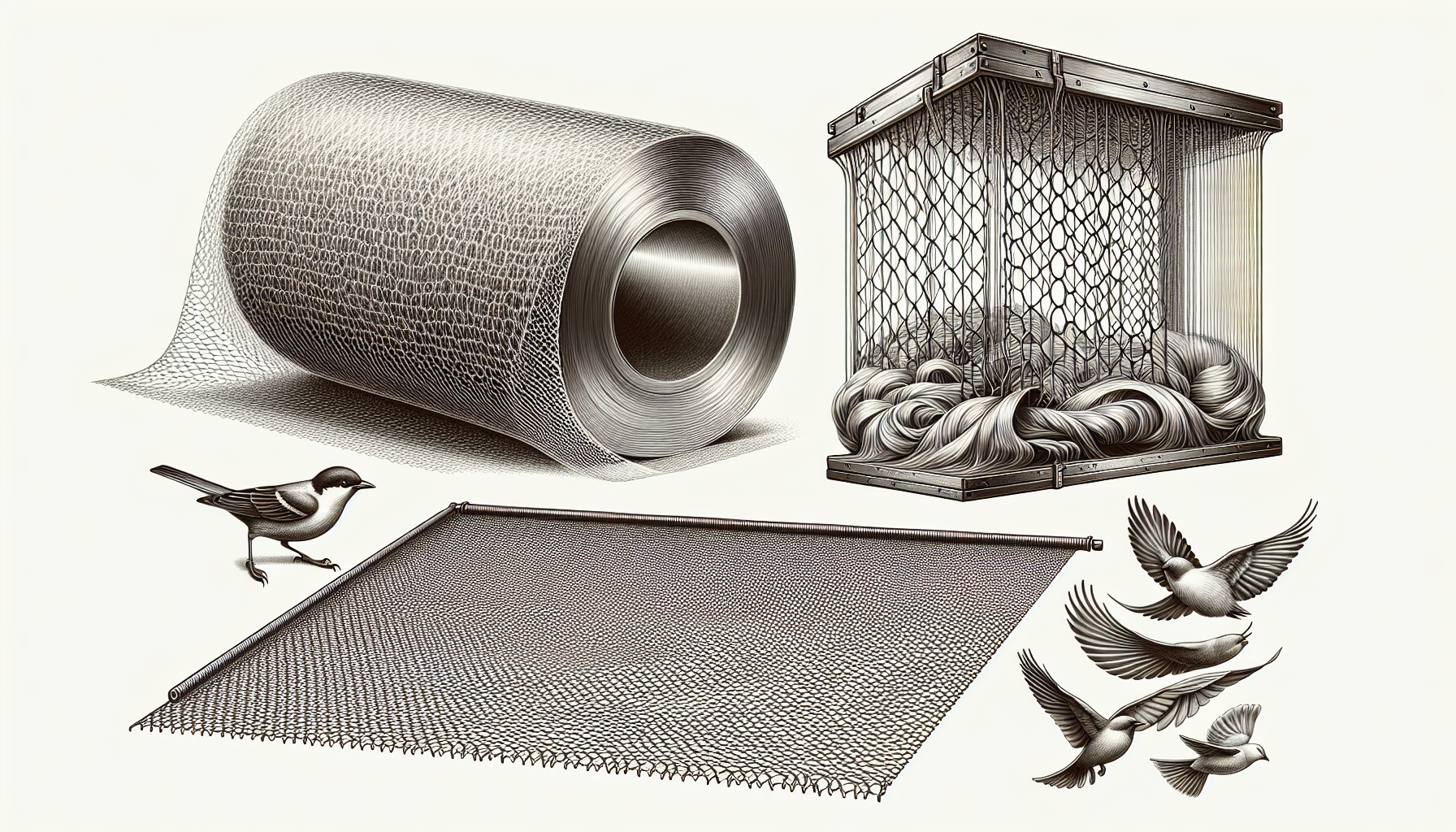
The material of your bird netting is just as important as mesh size when it comes to ensuring the longevity of your bird control solution. The frontrunners for bird netting material are:
- Nylon: a lightweight contender, ideal for agricultural use and lauded for its ease of installation. However, it has a higher friction coefficient, which could lead to challenges in certain environments.
- Polyethylene: a durable and versatile option that is resistant to UV rays and weathering. It is commonly used in commercial and industrial applications.
- Stainless steel: a heavy-duty option that provides excellent durability and resistance to corrosion. It is often used in high-security areas or where there is a risk of bird damage.
Consider the specific needs of your application when choosing the material for your bird netting.
Polyethylene steps up as a more durable option. Its resistance to UV rays, thanks to UV stabilization, contributes greatly to its longevity, making it a common choice for industrial settings. This high-density material stands the test of time, ensuring that you won’t be replacing your netting anytime soon. Then there’s the heavyweight champion, stainless steel, which provides unparalleled strength for high-stakes areas like airports, though it may require Hercules to handle.
Let’s not forget about other contenders such as Kevlar, known for its strength and heat resistance, and polypropylene, which offers a good balance between lightness and durability. While Kevlar boasts exceptional resilience, it comes with a higher price tag and can be more challenging to work with. Polypropylene, on the other hand, serves as a middle ground but may not be the best choice for applications involving high temperatures due to its lower melting point.
Heavy Duty Bird Netting for Permanent Installations

When it comes to fortifying your defenses against birds for the long haul, heavy-duty bird netting is the gold standard. Products like Bird Net 2000™ are designed for those who mean business, boasting a break strength of over 40 lbs and a resistance to being UV-stabilized, rot-proof, and waterproof. This six-strand, knotted polyethylene behemoth laughs in the face of harsh conditions.
Flexibility is another hallmark of heavy-duty netting. Customizable to the nines, netting can be used to fit any installation requirement, ensuring that every corner of your property is shielded from winged invaders. Available in colors like black, which comes with a 10-year guarantee, white, and stone, these nets also offer a flame resistance feature, withstanding temperatures from the freezing depths of -250°F to a melting point above 270°F.
Investing in such a robust bird control solution pays dividends, as it provides peace of mind and protection for years to come. Many have shared their satisfaction with heavy-duty netting, noting its ability to withstand the test of time without succumbing to the elements. It’s a permanent fixture that continues to stand guard, ensuring that birds find somewhere else to loiter.
Garden Netting for Seasonal Bird Problems

Seasonal bird issues call for a different approach, and this is where lightweight garden netting shines. It’s the knight in shining armor for your garden, protecting your tender fruits and vegetables from aerial assaults. This type of netting is not only effective but also strong enough to deter birds while being easy to handle and install.
However, every rose has its thorn, and garden netting is no exception. Users have reported challenges in deploying the netting, from difficulty in unwrapping and spreading it over plants and trees to discrepancies in advertised dimensions. Despite these hurdles, many gardeners find that once in place, the netting does a stellar job at keeping birds at bay.
The beauty of garden netting is its reusability. Year after year, it can be unfurled to stand as a guardian over your bounty. Users have been pleasantly surprised by its sturdiness, belying its delicate appearance. It’s a testament to the notion that sometimes, the simplest solutions are the most effective.
Anti Bird Netting Products for Specific Needs

Every situation demands a tailored response, and the bird control industry has risen to the challenge with specialized anti bird netting products, including bird control netting. StealthNet, for example, is a customizable marvel that caters to various environments, from ponds to utility enclosures. Available in multiple mesh sizes, it provides a near-invisible barrier that effectively keeps birds out without causing them harm.
The location of a building greatly influences the choice of bird exclusion netting. Whether it’s the exposed roofs, busy warehouses, or expansive loading docks, each setting requires a specific netting strategy. StealthNet excels in these environments, providing a nearly invisible, rot-proof protection that doesn’t compromise the aesthetics of the structure.
For pond owners, the installation of netting can be a bit nuanced. The recommended method involves stretching the net high enough above the water to prevent sagging, securing it around the perimeter with pegs, and using additional netting as needed. This ensures that your aquatic oasis remains tranquil and untroubled by feathered visitors.
Installation Tips and Bird Netting Hardware
Proper installation is the keystone of effective bird control, and the right bird netting hardware is your toolbox. From cables to fasteners and clips, each component plays a crucial role in creating a secure and taut exclusion zone. Tools like hog ring tools are indispensable for attaching netting to structures, while turnbuckles allow for fine-tuning the tension of cables.
The installation process varies depending on the area and type of netting. For example, StealthNet requires tensioned cables to maintain its integrity and effectiveness. Setting up a perimeter cable around the area to be netted is essential for keeping the netting tight and gap-free. When it comes to fruit trees, a simple drape over the canopy and a secure tie to the trunk may suffice.
Despite the variety of hardware and methods, the end goal is the same: a bird-free zone that doesn’t compromise on looks or functionality. And with the right approach, bird netting installation can be a smooth and rewarding process that even a novice can accomplish with a bit of guidance.
Cost-Effectiveness and Longevity
The notion of cost-effectiveness is music to any property owner’s ears, and bird exclusion netting hits the right notes. Here are some reasons why:
- It offers a variety of price points to suit different budgets
- The right mesh size and material can lead to significant savings in the long run
- Customization options add to the netting’s versatility, ensuring you pay only for what you need.
The durability of bird netting is a testament to its value. Plastic netting, for instance, boasts a reputation for lifetime endurance, standing up to varied applications with ease. Before reaching your hands, high-quality netting undergoes rigorous strength testing, solidifying its promise of durability. With UV stabilizers integrated into products like StealthNet, longevity is practically guaranteed.
Furthermore, well-installed and maintained bird netting can serve as a steadfast guardian against bird damage for over a decade. This level of endurance translates into a cost-effective investment that continues to protect your property year after year without the need for frequent replacements or repairs.
Pros and Cons of Using Bird Exclusion Netting
The decision to implement bird exclusion netting is not one to be taken lightly, as with any significant investment. On one hand, the advantages are compelling: suitability for large areas, long-lasting nature, environmental safety, and efficacy against a diverse array of bird species, including those pesky pigeons. On the other, potential drawbacks like the risk of birds becoming trapped if the netting isn’t installed or maintained correctly, the initial expense, and the need for ongoing maintenance, present valid concerns.
It’s crucial to juxtapose these pros and cons against alternative bird control methods like deterrents and repellents. While these may offer a quick fix, they often lack the long-term reliability and comprehensive coverage that bird exclusion netting provides. Assessing your specific needs and circumstances will lead you to the best solution for your bird control dilemma.
Sharing narratives from those who’ve walked this path before, we hear tales of transformation where once pest birds plagued properties, now enjoy tranquility and cleanliness. Conversely, we also learn from the mishaps where inadequate installation or neglect led to less desirable outcomes. These stories serve as both inspiration and cautionary tales for prospective netting users. Contact NYC Extermination Today!
Summary
As our journey through the world of bird exclusion netting comes to a close, it’s clear that the right netting solution can be a game-changer for property and landowners plagued by bird-related issues. We’ve explored a range of topics, from the critical role of mesh size in deterring specific bird species to the importance of choosing the right material for your netting. We’ve also delved into the merits of heavy-duty netting for long-term protection, garden netting for seasonal challenges, and specialized products like StealthNet for unique requirements.
Reflecting on the insights shared, the message is clear: bird exclusion netting is a highly effective, durable, and cost-effective bird control solution that can provide years of protection. When properly installed and maintained, it stands as a silent sentinel against avian intruders, preserving the integrity and beauty of your spaces. So, whether you’re safeguarding a commercial building or a home garden, consider bird netting as a formidable ally in your bird control arsenal.
Frequently Asked Questions
What is the best mesh size to use for keeping out small birds like sparrows?
To keep out small birds like sparrows, it’s best to use a mesh size of approximately 19mm or 3/4″.
Can bird netting be reused, or is it a one-time use product?
Yes, bird netting can be reused season after season, making it a sustainable and cost-effective choice for protecting your plants and crops.
Are there bird netting options that are nearly invisible?
Yes, StealthNet is a bird netting option designed to be nearly invisible, blending seamlessly with the environment and coming in various colors to match the surroundings and provide an effective barrier without harming birds.
How long can I expect bird exclusion netting to last?
You can expect bird exclusion netting to last for several years, and high-quality netting can provide protection for at least 10 years, making it a long-term solution to bird problems.
What should I consider when choosing bird exclusion netting for an industrial setting?
When choosing bird exclusion netting for an industrial setting, consider the material’s durability and strength, and ensure the mesh size is appropriate for the birds you need to deter. This will help withstand harsh environments and effectively deter specific bird species.
Featured Photo by Jacques LE HENAFF on Unsplash
Recent Comments