

Beneath the surface: A Comprehensive Guide to the Termite Life Cycle is key to understanding these pervasive insects. This comprehensive guide delves into each stage from birth to colony expansion, demystifying the complex social hierarchy and reproductive strategies that let termites thrive unseen.
Key Takeaways
- Each termite colony is made up of a caste system: workers for nest maintenance and foraging, soldiers to protect the colony, and reproductive termites to expand and create new colonies.
- Termites go through a lifecycle that includes a nuptial flight (swarming), during which male and female reproductives leave their colonies to mate and establish new ones, which can take several years to mature fully.
- Termite infestations are characterized by signs like swarmers, mud tubes, and damaged wood; prompt professional treatment is essential to manage and eliminate infestations.
Unveiling the Termite Castes
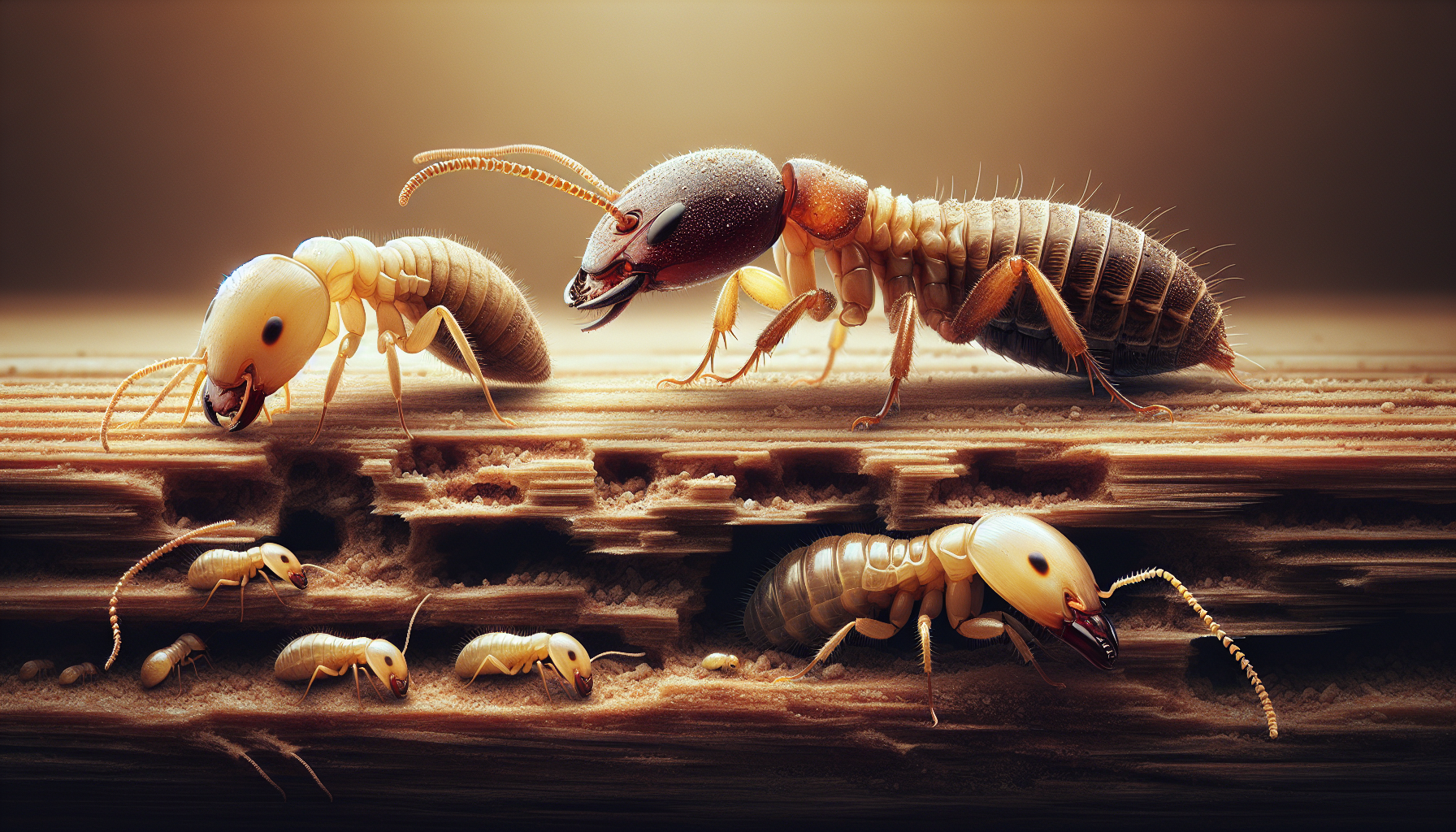
Termites, often viewed as insignificant insects, actually have a highly structured society. Each termite colony consists of three primary castes: worker termites, soldier termites, and reproductive termites, each performing distinct roles that contribute to the overall function of the colony. The transformation from larvae into these specific termite castes is regulated by the needs of the colony and the pheromones emitted by the king and queen.
Now, we will examine the characteristics of each caste more closely.
The Industrious Worker Termites
At the heart of every termite colony are the worker termites, the backbone of the termite life cycle. They are responsible for the upkeep of the nest, caring for the king, queen, and termite nymphs, and ensuring the cleanliness of eggs. These diligent termites are the unsung heroes, silently contributing to the growth and prosperity of the colony.
So, what feeds these industrious termites? The answer lies in their diet. The worker termites consume cellulose, which is a crucial element present in both wood and grass. This sustains them as they carry out their tasks within the termite colony. But their responsibilities don’t stop there. They also construct extended tunnels from the nest in search of additional food sources, aiding in the sustenance and expansion of the colony.
The Protective Soldier Termites
While worker termites take care of the colony’s internal operations, soldier termites serve as the defenders of the colony. They safeguard their fellow nestmates from potential dangers, providing a much-needed shield against intruders.
These brave soldiers employ their sharp jaws and distinctively shaped heads to repel invading ants or other predatory insects. Soldier termites are larger in size compared to workers and can be identified by their pale red, light brown, or white coloration. They communicate with other termites in the colony, including other termites from different castes, using head-banging against tunnel walls to create vibrations and pheromones to establish scent trails and guide other workers.
The Royal Reproductive Termites
The royal class of the termite colony consists of the reproductive termites, the king and queen. Their primary role is to produce offspring and ensure the growth of the colony by establishing new colonies. Known as swarmers or alates, these reproductive termites exhibit darker bodies and are the only termites with pigmentation and eyes as they are exposed to sunlight. The king maintains a smaller size compared to the queen, remaining close to the dimensions of an average worker termite.
The egg-laying ability of the queen termite significantly impacts the growth of the colony. In the initial years, the queen lays fewer than 100 eggs, but as she matures, her egg-laying capacity significantly increases, sometimes reaching thousands per year. This leads to faster and more extensive growth of the colony.
When two swarmers engage in mating and locate a suitable site, they discard their wings and initiate the formation of a new colony. The queen then resides in a chamber within wood or beneath the ground, and the king and queen provide care for the first batch of eggs until the colony reaches a size where others can take over caretaking responsibilities.
The Genesis of a New Colony
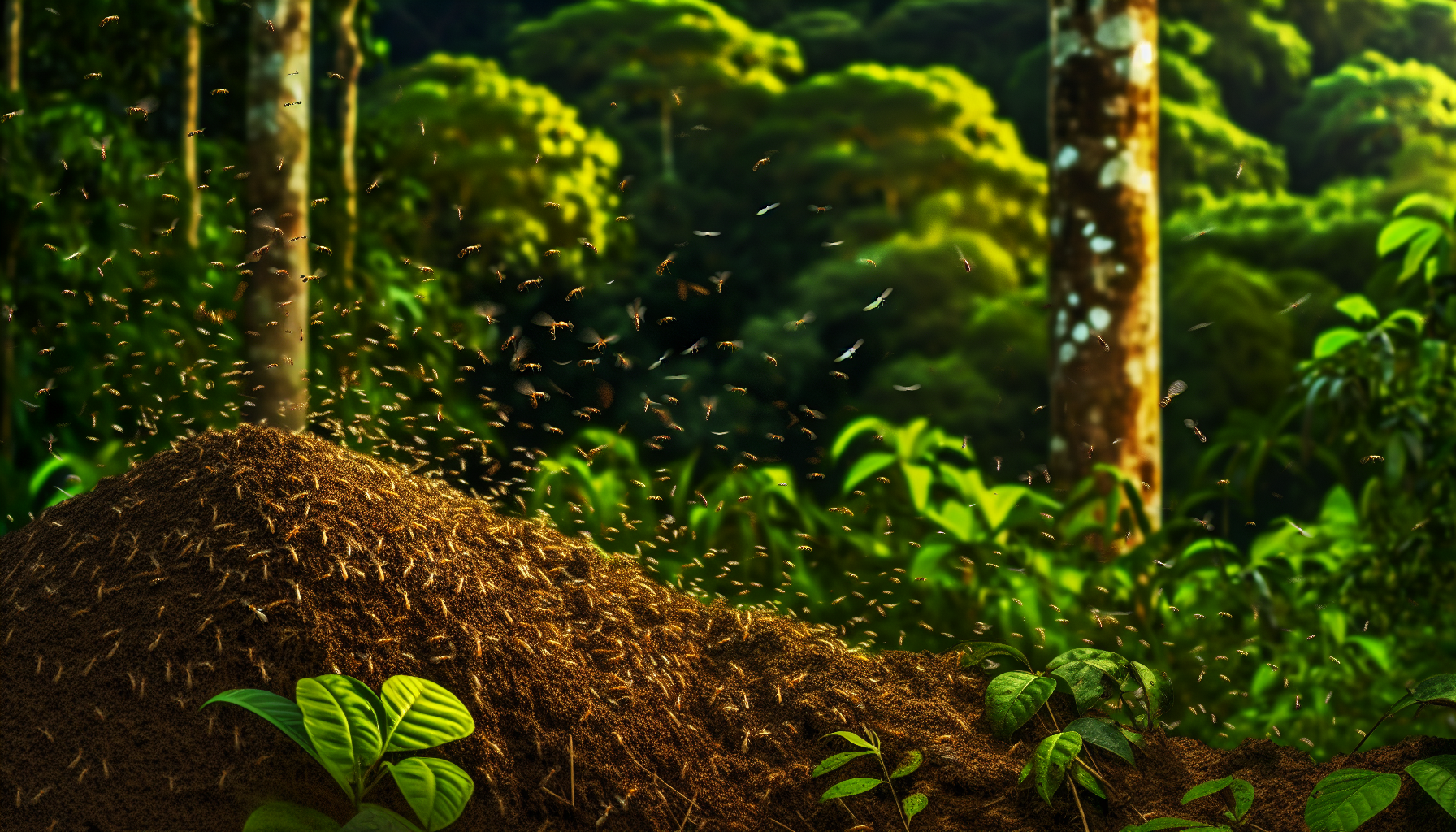
The formation of a new termite colony is a fascinating process. It begins with a termite mating flight, also known as a nuptial flight, where winged reproductive males and females depart from their existing colonies to reproduce. Upon finding mates, these reproductive termites commence the process of establishing a new colony.
After locating a suitable habitat, the king and queen discard their wings and concentrate on reproduction to populate and expand the new nest. The observation of a termite swarm can be influenced by factors such as the termite species present, prevailing weather conditions, and the time of year.
The Mating Flight Phenomenon
During the mating flight, alates – winged reproductive termites, leave their home colony on a quest to find a mate and start a new colony. This momentous event is triggered by factors such as heavy rainfall and warm, humid temperatures.
The termite mating flight usually takes place in early summer (April and June) or during the fall around September.
Founding a Nest
A termite’s journey extends beyond just finding a mate. After the mating process, the newly formed king and queen proceed to establish a nest, within which they will reside for the entirety of their lives, generating offspring. The selection of a nest site involves finding a mate, discarding their wings, and engaging in tandem walking to identify a suitable location.
After the mating flight and pairing, the new king and queen termites shed their wings and start digging a cell in the ground or a piece of wood, marking the beginning of their nest and a new colony. The establishment of a new termite nest typically takes about 6 to 7 years.
The Subterranean Termite Colony: A Hidden World
Subterranean termite colonies present a unique challenge due to their primary location. They are situated underground, frequently adjacent to a food source, making them difficult to detect and access. These subterranean termites are capable of accessing the wood in a residence by utilizing cracks in the foundation or constructing mud tubes, which serve as sheltered pathways from the soil to the wood they consume.
The population of a subterranean termite colony is no small number. A Formosan termite colony, for instance, has the capacity to accommodate a substantial number, ranging from several hundred thousand to 2 million members.
Drywood and Dampwood Termite Colonies: Above and Within
While subterranean termite colonies are hidden beneath the surface, drywood and dampwood termite colonies are found above ground. Drywood termites inhabit wood above ground, independent of soil, whereas dampwood termites favor environments that are moist, humid, or fully wet.
Dampwood termite colonies are generally of a small size, do not have a worker caste, and employ their fecal matter, referred to as frass, to seal holes in the infested wood, therefore maintaining ideal conditions. Drywood termite colonies commence when termites inhabit a fallen log or deceased tree on a premises, and subsequently extend into the lumber within buildings.
The Growth and Expansion of Termite Colonies
The process of termite colonies growing and expanding is intriguing. Termite colonies expand through the production of alates, which are the male and female reproductive members produced to initiate colony expansion. However, it’s not an easy task for these alates. A significant number of them fall prey to predators during the mating flight, leading to a high mortality rate and only a small portion managing to locate nesting sites and engage in reproduction.
Even with the high mortality rate during the mating flight, termite colonies generate a large number of alates, raising the chance that some will survive the flight, find nesting sites, reproduce, and successfully form new colonies.
The population of a termite colony can vary from 10,000 to millions of individuals, demonstrating the colony’s capacity for growth and expansion over time.
The Lifecycle Journey: From Egg to Adult
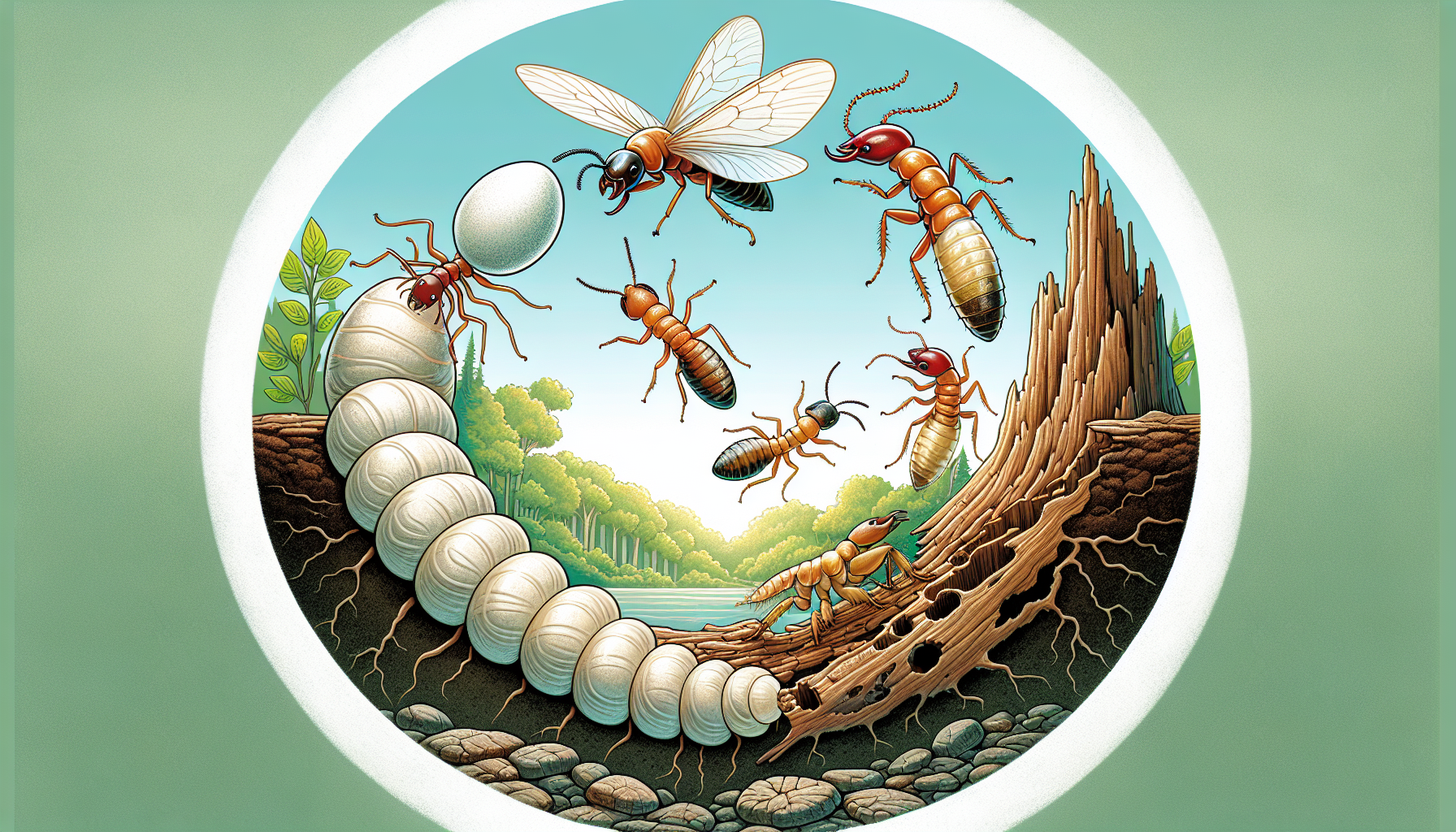
The termite’s life cycle is an impressive journey, marked by transformation. From the moment they hatch from an egg to the moment they become adults, termites go through numerous stages of development, each marked with unique characteristics and tasks.
The Birth of Termites: Egg Stage
The lifecycle of a termite begins with the egg. Tiny, translucent, and bearing a resemblance to small jelly beans, termite eggs undergo an incubation period of a few weeks before emerging as larvae. The hatching of termite eggs typically occurs within a timeframe of 26 to 30 days, subject to the prevailing climate conditions.
The production of termite eggs is a seasonal affair. Termites lay eggs during a specific breeding season, which generally takes place in the spring or toward the end of winter.
The Developmental Stages: Nymphs and Molting
After hatching, termite larvae, known as nymphs, undergo several stages of molting before transforming into workers, soldiers, or reproductive termites. These nymphs exhibit characteristics such as being soft, white, and translucent. They possess two antennae, six legs, and three body parts.
The transformation of a termite nymph into a worker termite occurs through the process of molting and development. Certain species of termites exhibit a regressive molt in nymphs, leading to the development of imaginal traits like wing buds and changes in body size. Depending on the requirements of the colony, the nymphs may further develop into secondary reproductives capable of reproduction but without fully developed wings.
Detecting and Understanding Termite Infestations
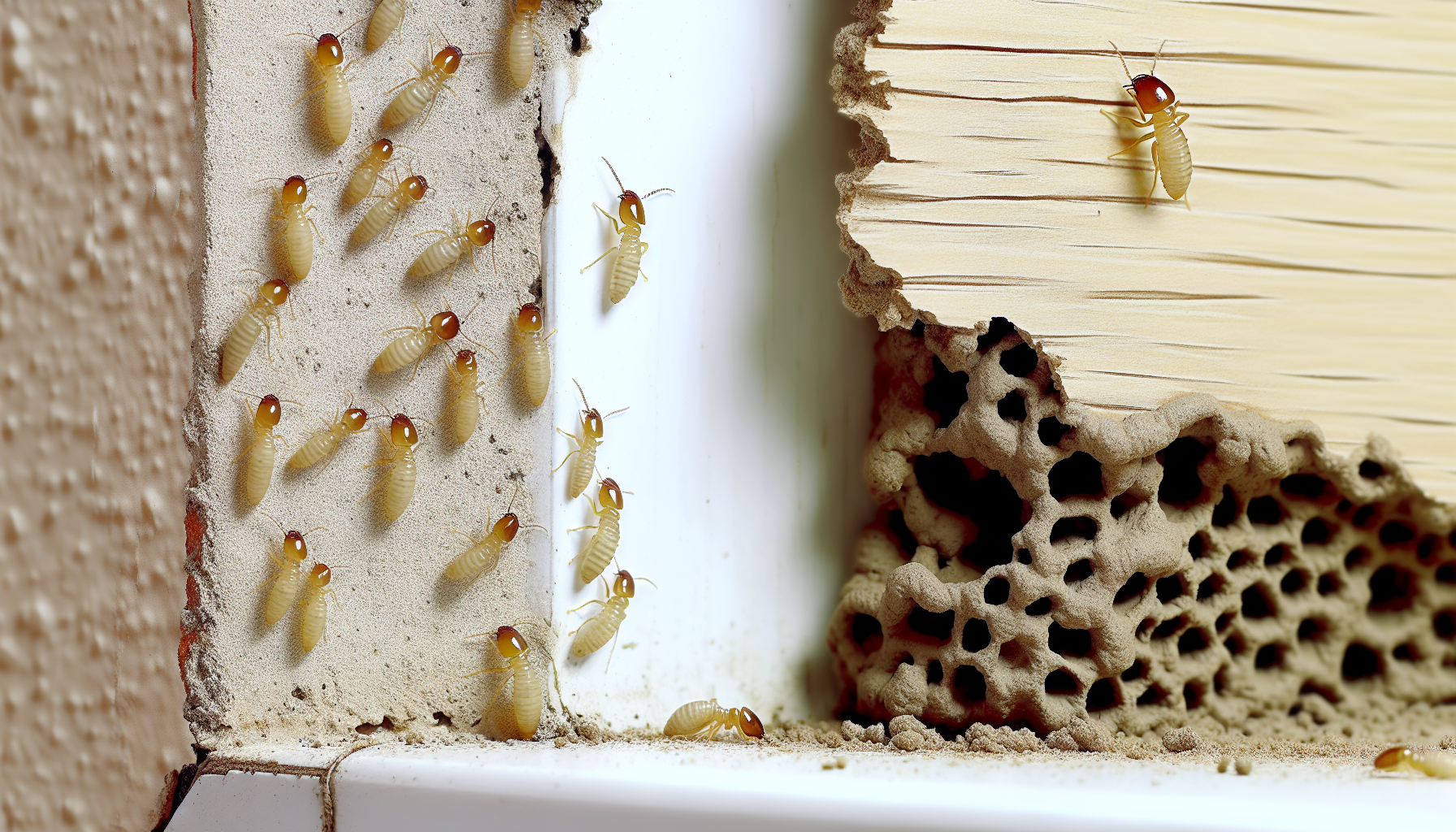
Recognizing termite infestations necessitates knowledge of their telltale signs. The main indicators of a termite infestation consist of the presence of swarmers, mud tubes, and damaged wood. Termite mud tubes can be identified as small tunnels, usually ranging from ¼ to 1 inch in diameter, which may be observed along walls, ceilings, or the foundation of a residence, bearing resemblance to veins.
Damage to wood caused by termites can be recognized by the presence of frass or droppings left by drywood termites, buckling wood, swollen floors and ceilings, and the existence of visible mazes within walls or furniture. Additional signs of a termite infestation could encompass visible damage on the exterior of a home, discarded shed insect wings, holes drilled into wooden structures, and termite droppings.
The Longevity of Termites and Their Colonies
Considering the lifespan of termites and their colonies offers an intriguing perspective. The typical lifespan of a termite queen is up to 35 years, while the typical lifespan of both termite workers and soldiers is around one to two years. Even without a queen, termites have the ability to survive, although her presence is essential for the colony’s development and long-term survival.
The lifespan of termite colonies varies, with some capable of existing for several decades. This demonstrates the resilience and adaptability of these unique insects.
When Termites Invade: Addressing Termite Problems in Homes
Quick action is required when termites infiltrate your home. Homeowners can identify a termite infestation by observing termite swarms, especially if they appear near the foundation or inside the property, and also from areas such as tree stumps and woodpiles in the yard.
When dealing with a termite infestation, professional termite control services are a must. A professional termite control company like MightyMite Termite offers homeowners termite control solutions that encompass:
- Complimentary inspections
- Customized treatment plans designed to be effective for each specific situation
- A 100% guarantee of their work for a period of up to two years after the service, ensuring long-term protection against termites.
Summary
This exploration into the world of termites has given us an in-depth understanding of their complex life cycle, the functioning of their colony, and the methods to detect and control their infestations. From the industrious worker termites to the protective soldier termites and the royal reproducer termites, each caste plays a vital role in the survival and expansion of the colony. The resilience and adaptability of these insects, coupled with their fascinating lifecycle, make them an intriguing field of study.
Frequently Asked Questions
What are the stages of a termite life cycle?
A termite goes through an incomplete metamorphosis with three stages: egg, nymph, and adult. Depending on the colony’s needs, young termites can molt several times over their lives.
How far below the surface do termites live?
Subterranean termites can live just below the surface to as much as 12-20 feet down, with foraging territories that may extend several hundred feet from the colony. These termites build large colonies underground and compose elaborate tunnels and chambers.
Do swarmers mean I have termites?
Yes, termite swarmers are a clear indication of termite activity around your home and should be taken seriously. Keep an eye out for other signs of termites.
How long do termites live in a house?
Termites can live in a house for several years and may grow their population to up to one million if not treated effectively.
What are the main indicators of a termite infestation?
The main indicators of a termite infestation include the presence of swarmers, mud tubes, and damaged wood. These signs can help you identify and address a potential termite problem.
Featured Photo by Morten Jakob Pedersen on Unsplash
Recent Comments