
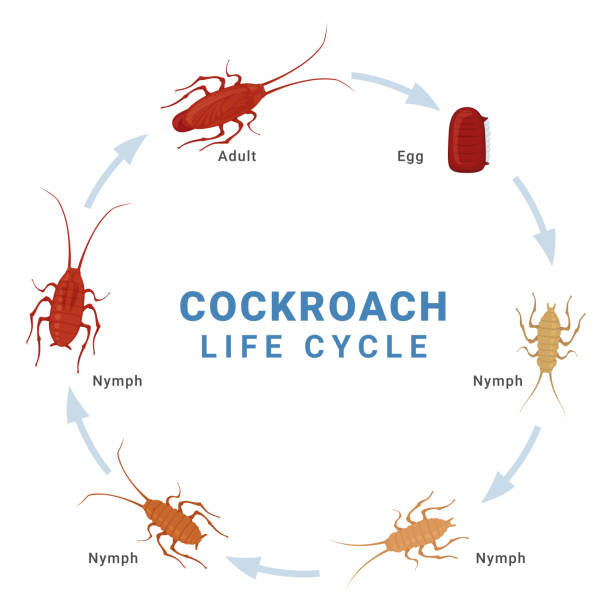
The cockroach life cycle has three stages: egg, nymph and adult. The eggs grow inside a hard case called an egg capsule, or ootheca. Young roaches, called nymphs, hatch without wings and shed their skin several times before they become adults that can breed. A German cockroach, the roach most NYC apartments deal with, can go from egg to adult in about 3 months at room temperature.
That speed is the problem. A spray that kills the roaches you see can leave the egg cases behind, and a new batch hatches about a month later.
There’s no pupa stage. Scientists call this incomplete metamorphosis: a baby roach already looks like a small adult.
Stage 1: the egg capsule
Female cockroaches don’t lay eggs one at a time. They make a hard, purse-shaped capsule that holds a batch of eggs. The number of eggs, and what the female does with the capsule, depends on the kind of roach, according to Penn State Extension and Oklahoma State University Extension:
- German cockroach: 30 to 48 eggs per capsule. The female carries it until the eggs are about to hatch.
- American cockroach: 14 to 16 eggs per capsule, left in a hidden spot.
- Oriental cockroach: about 16 eggs per capsule.
- Brown-banded cockroach: up to 18 eggs per capsule, glued to furniture, walls or other surfaces.
The capsule’s shell protects the eggs, so many sprays never reach them.
Stage 2: nymphs
Nymphs hatch looking like small adults without wings. They’re pale right after hatching and after each molt, then they darken. As they grow, they shed their skin (molt) several times:
- German cockroaches go through 6 to 7 nymph stages
- Oriental cockroaches molt 7 to 10 times
Nymphs eat, hide and spread germs like adults. They just can’t breed yet. Small roaches without wings mean roaches are breeding nearby.
Stage 3: adults
After the last molt, the roach has full wings (or tiny wing pads, in Oriental females) and can breed. Females keep making egg capsules for the rest of their lives:
- A German cockroach female makes 4 to 8 capsules, about one every 6 weeks at room temperature.
- An American cockroach female makes 15 to 90 capsules, about one a week.
- An Oriental cockroach female makes about 8 capsules.
How long the cockroach life cycle takes
Warmth speeds up every stage, and cool temperatures slow it down. So these are ranges, not fixed numbers.
| Roach | Eggs per capsule | Eggs hatch in | Egg to adult |
|---|---|---|---|
| German | 30 to 48 | About 4 weeks | About 3 months |
| Brown-banded | Up to 18 | About 70 days | About 161 days on average |
| Oriental | About 16 | About 60 days | About a year, often longer |
| American | 14 to 16 | 50 to 55 days | About 7 months to nearly 3 years (nymphs take 160 to 971 days) |
Figures from Penn State Extension (German, American, Oriental) and Oklahoma State University Extension (German, Oriental, brown-banded). The German cockroach’s short cycle is why a small kitchen problem can grow into a large one within a few months.
What the life cycle means for getting rid of roaches
- Treat twice. One treatment rarely catches every egg case, so plan a second one timed for the next hatch.
- Use bait in the cracks. Gel baits where roaches hide keep killing nymphs as they hatch and feed.
- Treat the units around yours. In an apartment building, one untreated apartment next door keeps supplying new roaches.
Here’s a simple example. Say a tenant sprays the kitchen, sees no roaches for two weeks and thinks the problem is solved. Then small roaches without wings show up under the sink. They’re nymphs from egg capsules the spray never reached. A German cockroach capsule hatches about 4 weeks after it forms. Baits in the cracks where they live, plus a second treatment, catch them as they hatch.
This math applies to roaches breeding in your apartment. One big American cockroach that wandered up from the basement once isn’t a colony in your kitchen. It’s a sign to check the basement and the drains.
Breaking the cycle in an apartment building
Integrated Pest Management (IPM), the approach NYC’s Local Law 55 of 2018 requires in buildings with three or more apartments, works with the life cycle. Find where roaches breed, take away their food and water, seal the gaps they use, treat where they live, and follow up until no new nymphs appear. Read more about roaches in NYC and how to prevent cockroaches.
NYC Extermination starts with a free on-site inspection and treats with targeted, EPA-registered products. For landlords and managers, we plan pest control for the whole building and set a visit schedule that fits it. See our cockroach exterminator service or call (347) 988-2315.
Frequently asked questions
What do cockroach eggs look like?
You won’t see single eggs. You’ll see the egg case: a small, hard, brown capsule shaped like a purse, tucked into cracks, behind appliances or under furniture. A German cockroach female carries hers sticking out of the end of her body until it’s ready to hatch, according to Penn State Extension.
How long does it take cockroach eggs to hatch?
About 4 weeks for German cockroaches. American cockroach eggs take 50 to 55 days at room temperature, and Oriental cockroach eggs about 60 days.
How long does the cockroach life cycle take?
About 3 months for a German cockroach and about a year or more for an Oriental cockroach. American cockroaches take anywhere from about 7 months to nearly 3 years. Warm, humid rooms with plenty of food speed it up.
Can cockroach eggs survive pest control?
Yes. The hard capsule shields the eggs from many sprays, so new nymphs can hatch after a treatment. Baits placed where they hide, and a second treatment after the next hatch, deal with them.
How long do cockroaches live?
German cockroach females live about 20 to 30 weeks. American cockroach females can live up to 15 months, and Oriental cockroach females 5 to 26 weeks.

Recent Comments