
Wondering what are termites? These silent destroyers are more than a nuisance; they are sophisticated insects with a complex societal hierarchy and a significant role in the environment. Our guide goes straight to the point, providing essential knowledge on how to spot, prevent, and tackle termite infestations, all while offering a glimpse into their remarkable world.
Key Takeaways
- Termites are ecologically beneficial insects, but when they infest homes, they can cause significant structural damage, making early detection and treatment critical for homeowners.
- Understanding termite anatomy and behavior, such as their caste system, is essential for identifying infestations and employing the correct control measures to address different species and their unique characteristics.
- Implementing effective termite control strategies involves reducing conditions that favor infestations, conducting regular inspections, and using professional extermination services to eliminate existing colonies and prevent future ones.
Unveiling the Termite World: An Overview
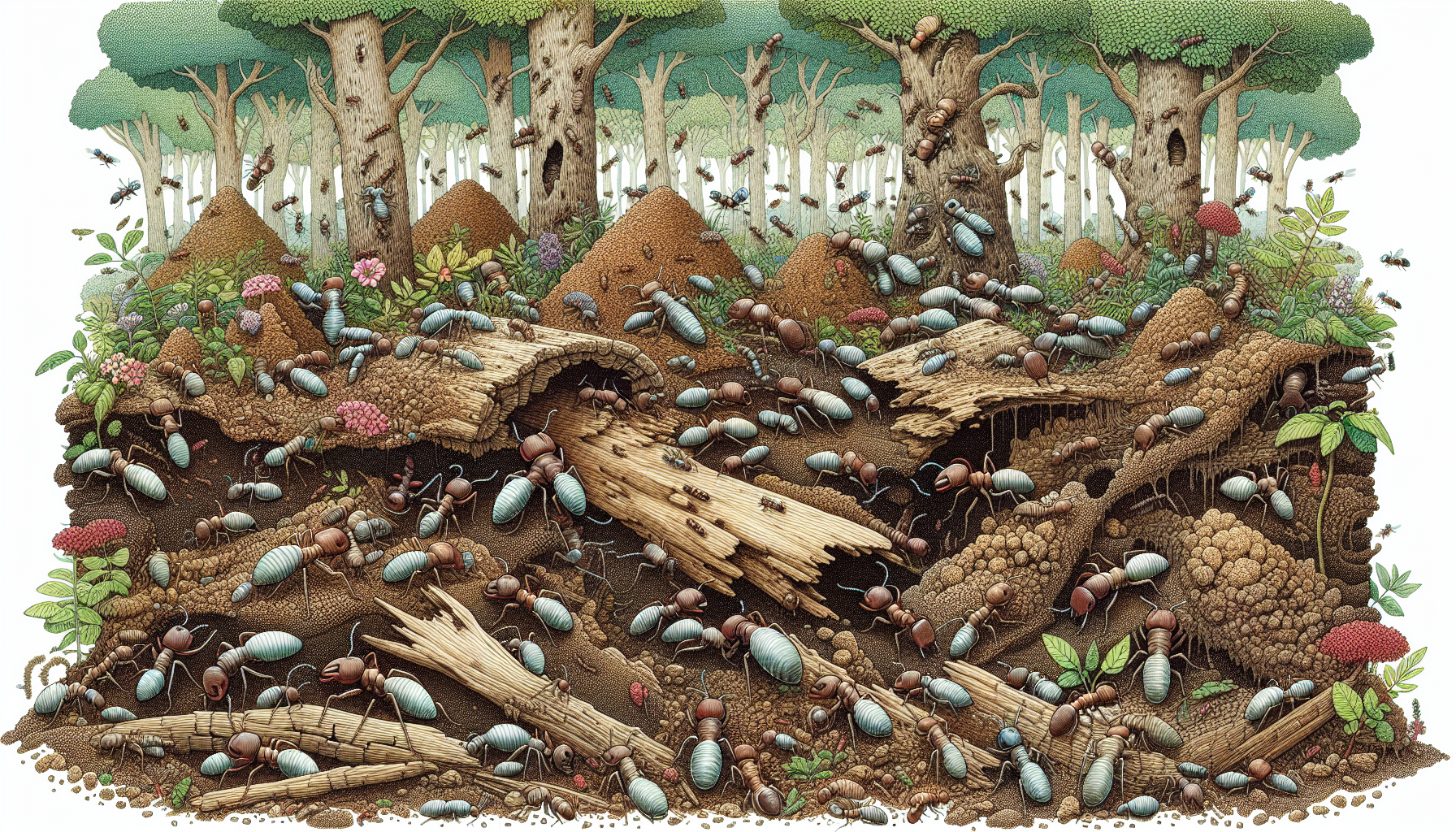
Termites are invertebrates from the order Isoptera, renowned for their highly organized societies and the significant role they play in ecosystems. With over 2,000 recognized termite species worldwide, these small insects have evolved to exploit a range of habitats, from the moist soil preferred by subterranean termites to the dry wood favored by drywood termites.
Each termite colony is a well-oiled machine, functioning via a caste system that involves:
- Workers: responsible for foraging food and maintaining the nest
- Soldiers: defend the nest using their larger mandibles to counter threats
- Reproductive individuals (kings and queens): responsible for producing offspring and ensuring the continued existence of the colony.
Interestingly, termites cannot digest wood and plant materials without the help of symbiotic protozoa and bacteria that reside in their guts. This mutualistic relationship allows termites to extract nutrients from plant matter as termites feed, subsequently recycling these nutrients back into the environment, therefore playing a key role in nutrient cycling in ecosystems.
Yet, despite their ecological importance, termites have earned a notorious reputation as destructive pests due to the significant damage they can cause when they infest homes. The early detection of a termite infestation can prevent substantial damage, leading us to the importance of comprehending a termite’s anatomy.
Anatomy of a Termite: Identifying Characteristics
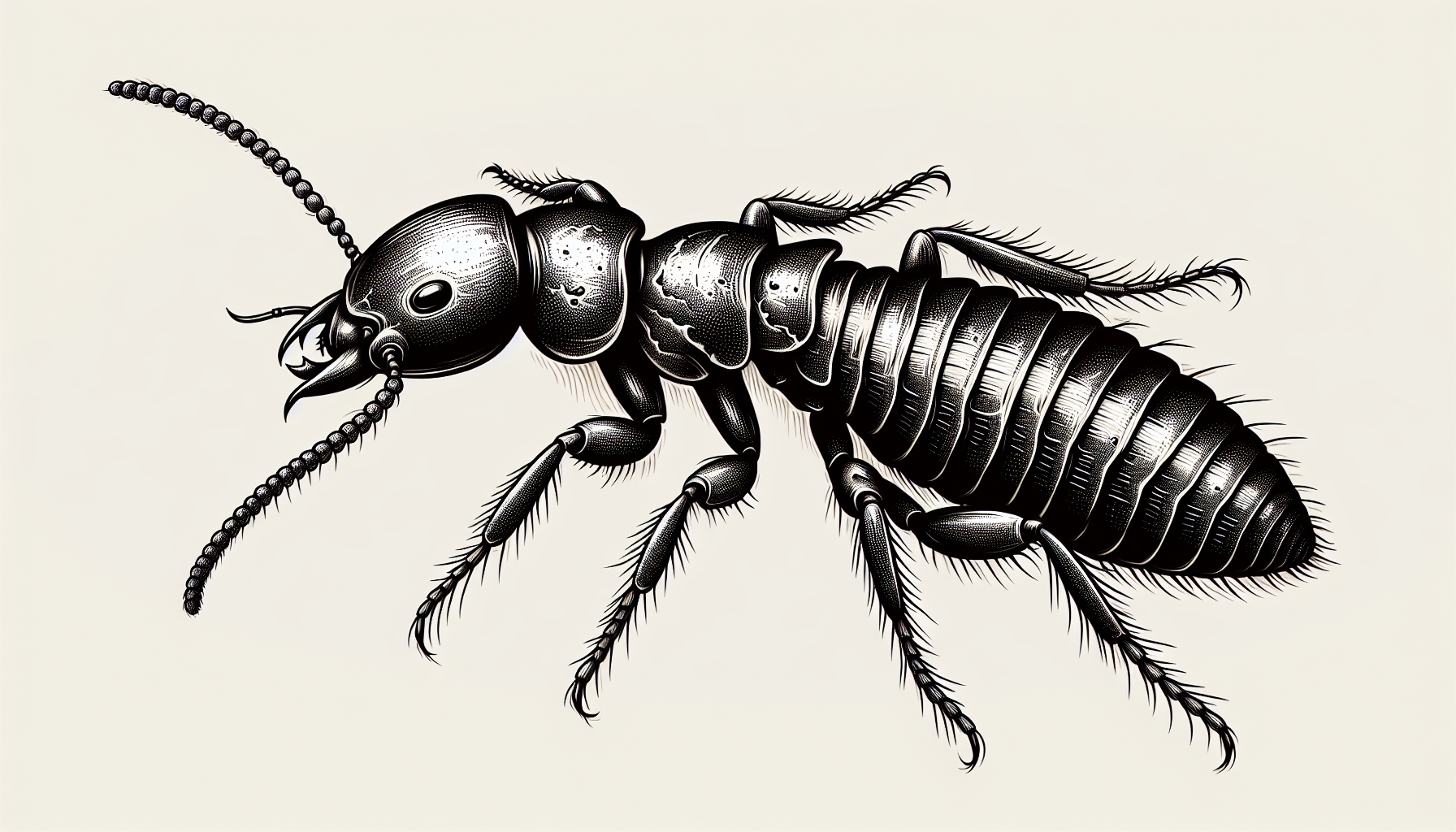
At first glance, termites may seem similar to ants, but a closer look reveals distinguishing features. Termites have three body segments – the head, thorax, and abdomen – and they possess straight, bead-like termite antennae, unlike ants, which have elbowed antennae. Comprehending these unique traits is instrumental in early detection of a termite infestation and the execution of successful termite control measures.
The reproductive termites, known as alates or swarmers, are the winged termites that venture out of the nest to start new colonies. Alates have eyes and are darker in color, ranging from light brown to black. When ready to swarm, they display two pairs of wings of equal length, another distinguishing feature from ants, whose hind wings are shorter than their forewings.
Then come the soldier termites, recognizable by their darker, large heads, equipped with strong, pincer-like mandibles necessary for colony defense. Some soldiers are also capable of secreting substances from their heads that can serve as a defense mechanism against predators.
On the other hand, worker termites, arguably the busiest members of a termite colony, have the following characteristics:
- They are typically a creamy white color
- They measure approximately a quarter of an inch or less in length
- They possess small jaws for chewing materials
- They lack eyes and rely on scent and moisture trails to navigate their environment
These workers are the ones responsible for the infamous termite damage, as they tirelessly gnaw through wood and other cellulose materials for food, often causing significant structural damage in human dwellings.
The Life Inside a Termite Colony
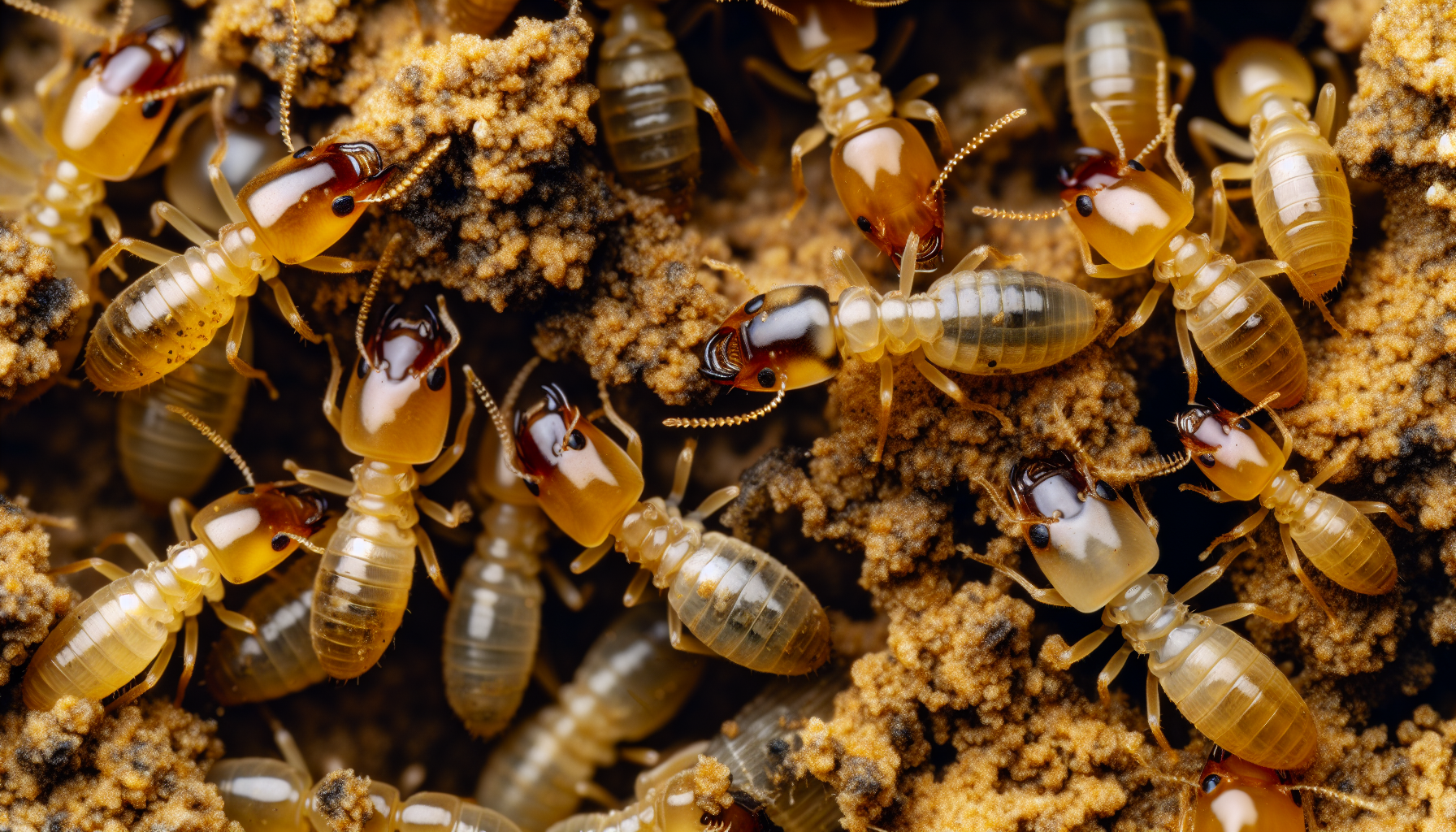
We venture further into the fascinating realm within a termite colony. A termite colony operates as a well-defined caste system, with each caste fulfilling specialized roles vital for the colony’s survival. This efficient social hierarchy guarantees seamless operation of the colony, ensuring its survival amidst adversity.
Worker termites, the largest group within the colony, are diligent laborers. They handle everything from foraging for food to general repair and maintenance work and even feeding the non-worker members like immature termites, soldiers, and reproductives. It’s the workers that digest cellulose with the aid of their hindgut microorganisms and distribute food among the colony members through a process known as trophallaxis.
Soldier termites, with their larger mandibles, defend the nest from potential threats. Though they represent a smaller proportion of the colony compared to the workers, soldiers play an indispensable role in safeguarding the colony’s integrity.
The king and queen termites form the reproductive caste and are responsible for producing offspring, thus ensuring the colony’s continuation and expansion. The queen, in particular, plays a key role in the growth and development of the colony, as we will explore further in the next section.
Termite Queens and Reproduction
Termite queens are the heart of the termite colony. With an extensive lifespan that can exceed 20 years, they are key to the generation of new termites. A termite queen’s life is all about reproduction. She possesses an enlarged abdomen specifically developed for prolific egg production, with the potential to lay thousands of eggs per day during peak capacity.
Beyond egg laying, queen termites manage the growth of their colonies through the release of pheromones. These chemical signals influence termite behavior and even the development of secondary reproductive queens. The eggs produced by the queen emit pheromones that prevent other termites within the colony from becoming reproductives, allowing her to maintain reproductive dominance.
This mechanism ensures that the queen’s role in the colony is secure. However, the termite colony is not left helpless when the queen dies. A secondary reproductive termite can take over egg production to ensure the continuity of the colony, highlighting the resilience and adaptability of termite colonies.
From Nymphs to Workers: Growth and Caste System
The termite caste system ensures the colony’s needs are always met. Nymph termites, which are young termites, are versatile and can become workers, contributing to tasks like tunnel creation and colony maintenance. This versatility allows the colony to adapt and respond to its needs effectively.
The queen termite can manipulate production of different castes, such as increasing soldier numbers via pheromone detection, to maintain balance within the colony. This ability to respond and adapt to the colony’s needs is vital for its survival.
Interestingly, workers and soldiers are sexually immature termites, comprising both males and females within the colony. Despite their immaturity, they play critical roles in ensuring the smooth functioning of the colony.
To ensure the colony’s needs are met, secondary reproductives may develop under the queen’s command when additional support is needed. This adaptability and versatility of the termite colony’s caste system further underscore the incredible organization and efficiency within a termite colony.
Subterranean Termites vs. Other Varieties
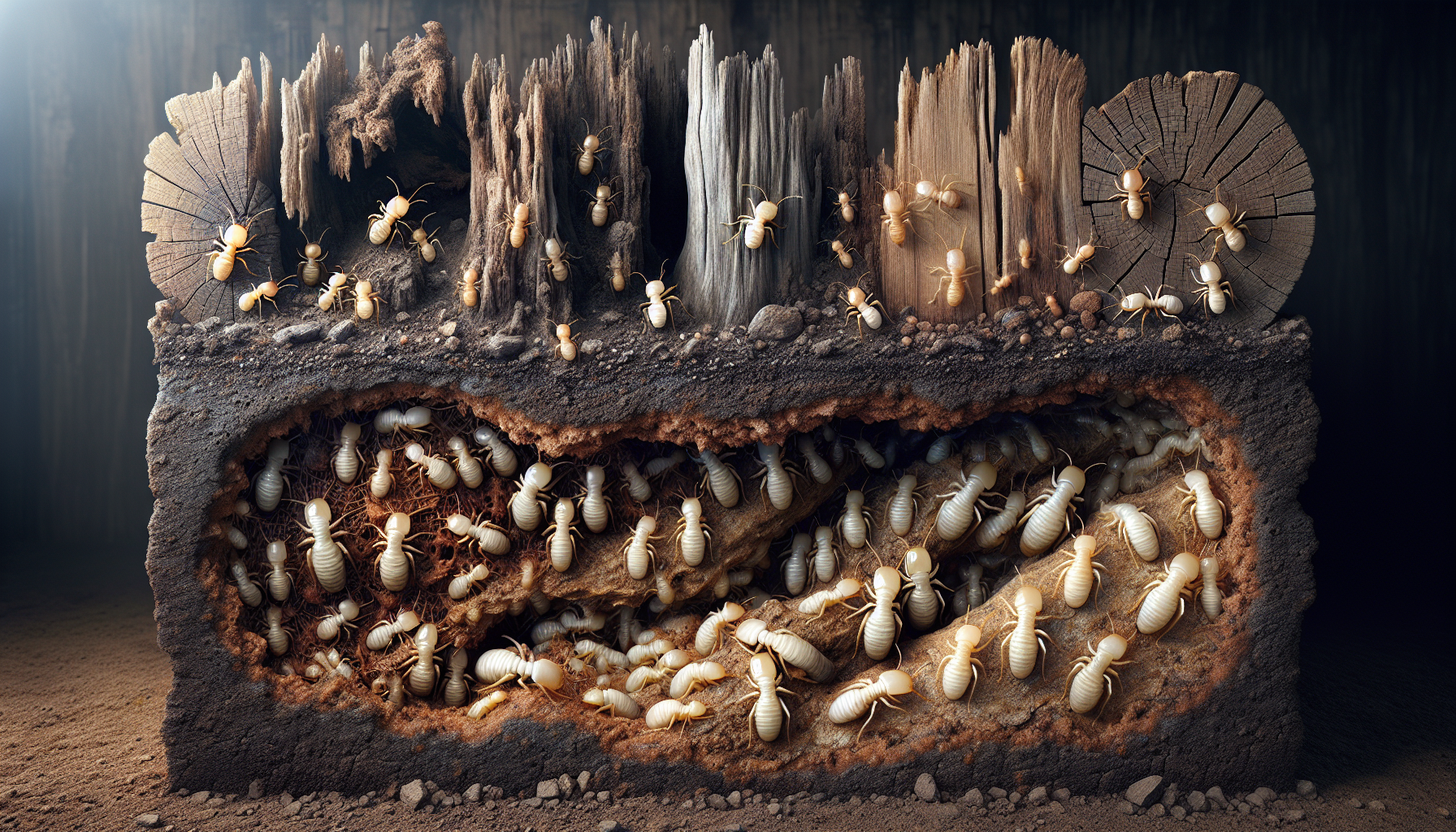
Now that we’ve delved into the life inside a termite colony, it’s time to examine the differences between various termite species. For example, subterranean termites:
- Thrive in damp soil
- Use mud tubes to connect their underground colonies to above-ground food sources
- These mud tubes offer a secure pathway for termites to travel, find food, and return to their colony safely.
Unlike subterranean termites, drywood and dampwood termites reside inside dead wood and do not require contact with the soil to maintain their colonies. They’ve adapted to exploit the wood itself as both a food source and a habitat. This means that these termites can infest any wooden structure, from furniture to structural timbers, causing significant damage if left undetected.
Among the subterranean termites:
- Eastern subterranean termites measure about three-eighths of an inch or 10 millimeters in length.
- Western subterranean termites are about the same size.
- Dark southeastern subterranean termites can range from 7 to 8 millimeters in length.
These differences between termite varieties underscore the importance of accurately identifying the species during a termite infestation. Each species presents unique challenges and requires specific control strategies, which we will explore further in the next section.
Identifying Different Termite Species
Identifying termite species is crucial in pest management, as each species has unique characteristics that influence their habitat preferences, behavior, and the types of damage they cause. Some termite species, such as the subterranean termites, including the particularly invasive Formosan subterranean termite, cause the most damage to homes in the United States.
Dampwood termites:
- Prefer living in decayed wood with high moisture
- Vary in color
- Have soldiers reaching up to 3/4 inch in length
- Have reproductive members growing from 1/2 to 5/8 inch
These termites are typically associated with excess moisture and might invade decaying wood sources like tree stumps, rotting fence posts, or even a termite nest.
Drywood termites, on the other hand, seek out sound wood and can infest house structures such as wooden beams, furniture, and structural timbers. Drywood termite soldiers measure around 3/8 inches in length, and their reproductive members are about 1/2 inch long, with body colors ranging from dark brown to yellowish. Drywood termite swarms usually occur during late summer or early fall.
Recognizing these different termite species and their unique characteristics can significantly enhance termite control efforts. But understanding the species is only one part of the battle. Knowing the signs of termite damage is equally important.
The Extent of Termite Damage: Recognizing the Signs
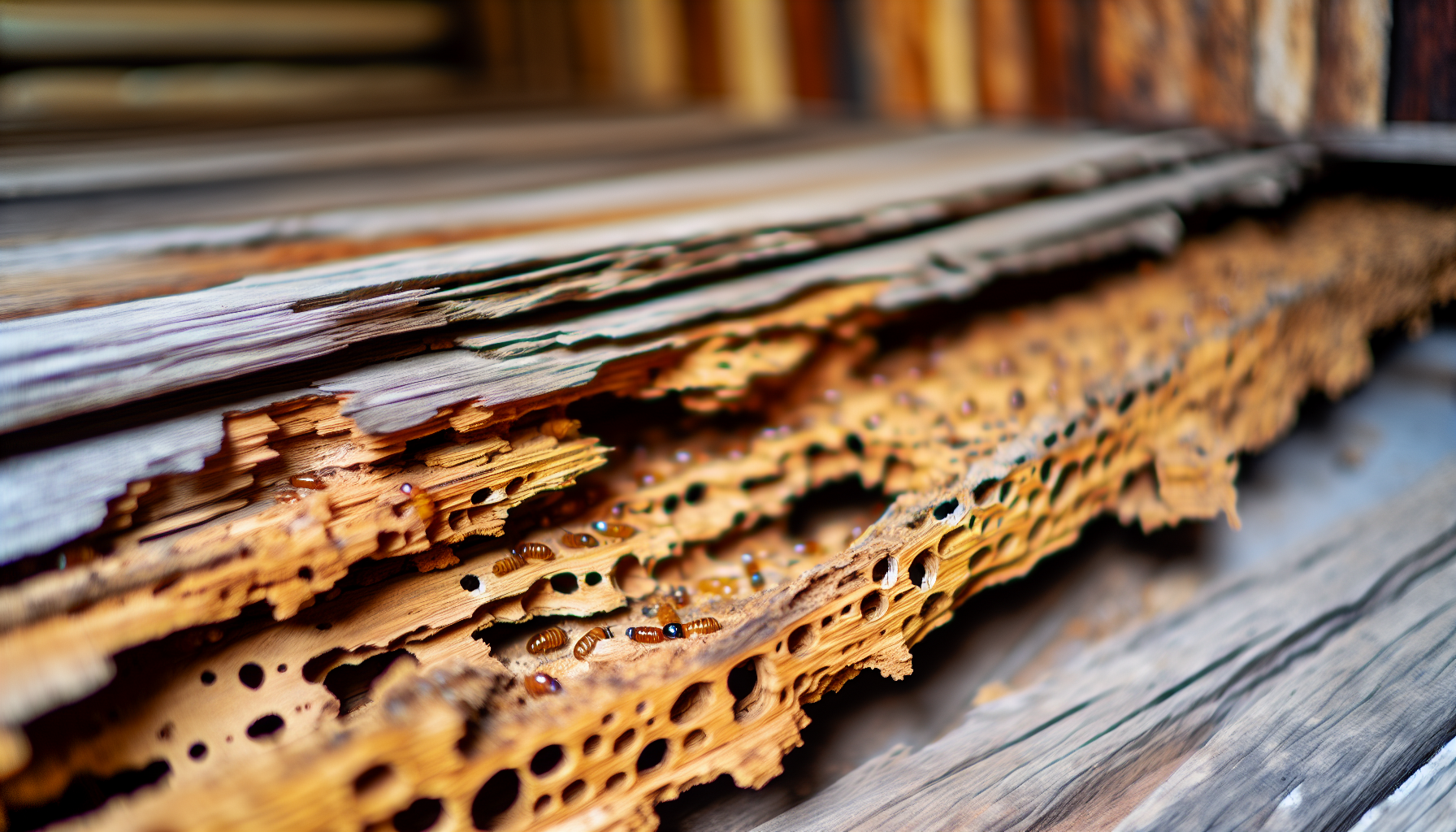
Termites may be small, but their destructive potential is enormous. Some termite species can pose significant threats to wooden structures, as they feed on and tunnel through wood, which can lead to costly damage if not managed. Swift identification of termite damage signs is critical to avert comprehensive destruction and expensive repairs.
Drywood termites, for instance, excavate large sections of wood, both along and against the wood grain, while subterranean termites create a honeycomb pattern in wood as they eat along the grain. The damage caused by termites is often difficult to spot until significant harm has been inflicted, as they typically eat wood from the inside out, leaving a thin veneer of wood or even just the paint.
Indicators of termite infestations include:
- Hollowed-out wood
- Sagging floors
- Discolored or drooping drywall
- Maze-like patterns in wooden items
- Stuck windows or doors
- Pinpoint holes in drywall
If you knock or tap on a section of wood and it sounds hollow, chances are you have a termite problem.
Drywood termites are particularly destructive, causing severe structural damage to furniture and wooden structures. Their activity can be identified through a hollow sound when the wood is tapped and accumulations of frass (termite droppings) beneath infested wood. Recognizing these signs can make a significant difference in mitigating termite damage.
When Termites Invade: Understanding Termite Infestations
Termite infestations are not random events. They are influenced by a combination of factors such as geographic location, moisture, and the presence of cellulose-rich materials like wood. Understanding these factors can help homeowners prevent termite infestations and protect their homes from these silent destroyers.
Geographic location influences termite infestations, with regions characterized by warmer and more humid climates being at greater risk. Subterranean termites are attracted to moisture and tend to build their colonies in moist soil, often near homes with wood rot or leaky pipes. Excessive moisture near the foundation of a house, especially when due to poor drainage, can increase the attractiveness of the area to termites.
Factors that increase the risk of termite infestations include:
- Warm and humid climates
- Moist soil
- Wood rot or leaky pipes near the home
- Excessive moisture near the foundation, especially due to poor drainage
Being aware of these factors can help homeowners take preventive measures to reduce the risk of termite infestations.
Termites can exploit openings in a home’s foundation, roof, or walls to gain entry, underscoring the need for proper sealing to prevent infestation. For example, wooden structures in contact with a home, like decks or mulch against the foundation, can bridge termites into the home.
While subterranean termites construct mud tubes for travel between their soil colonies and above-ground wood sources, drywood termites typically seek out sound wood and can infest house structures such as wooden beams, furniture, and structural timbers. Understanding how different termite species invade homes can guide effective prevention strategies, which we will explore in the next section.
Preventing Termite Entry: Safeguarding Your Home
The strategy to prevent termite invasion in your home is multifaceted. It involves:
- Reducing humidity
- Ensuring proper drainage
- Maintaining barriers between wood structures and the ground
- Sealing cracks in the foundation.
Reducing humidity in crawl spaces through proper ventilation can help to diminish termite infestation risks. Termites are attracted to moisture, and a drier environment can make your home less appealing to these pests. Here are some steps you can take to prevent termite infestations:
- Ensure that the ground slopes away from the foundation of your home.
- Make sure that gutter systems divert water away from your home.
- Install proper ventilation in crawl spaces to reduce humidity and moisture near your home’s foundation.
By following these steps, you can get rid of termites and help protect your home from termite infestations.
Maintaining a barrier between wood structures and the ground, as well as sealing any cracks in the foundation, helps to prevent easy termite access. For instance, storage of firewood, cardboard, or mulch against the home’s foundation must be avoided to eliminate termite food sources. Alternatively, using pebbles or rocks as an alternative to mulch near the home’s foundation can create a less hospitable environment for termites.
While these preventive measures can significantly reduce the risk of termite infestations, it’s equally important to have regular termite inspections, especially in high-risk areas, to detect any signs of termite activity early. This brings us to the next section: termite control strategies.
Effective Termite Control Strategies
Successful termite control encompasses prompt detection, expert treatment, and continuous prevention. Regular termite inspection is vital for the early detection of termites and prevention of extensive damage, as termites can remain undetected within a structure for years, causing significant damage.
Upon detection of termite activity, professionals utilize the following steps:
- Use monitoring stations to detect subterranean termite activity.
- Deploy slow-acting bait stations after identifying highly active areas during inspections.
- These baits can eradicate multiple termite generations, thereby eliminating the entire colony over time.
For areas with dense termite populations and severe damage, control professionals may apply conventional liquid insecticides as part of a comprehensive treatment approach. These insecticides are designed to create a barrier in the soil that termites cannot cross, effectively blocking their access to your home.
Finally, maintaining warranties and investing in professional termite treatments constitute a prudent investment to ensure the long-term protection of a home against termite infestations.
Choosing NYC Exterminations For Termite Control Services
When opting for a termite control service, it’s imperative to verify that the company holds proper licensing and insurance, and employs at least one certified, licensed pesticide applicator, such as NYC Extermination. This ensures that the company is qualified to handle the chemicals involved in termite treatment and that they are accountable for the services they provide.
Customer reviews, specifically related to the company’s termite control service, can provide valuable insights into their reliability and effectiveness. Positive reviews can give you confidence in the company’s ability to handle your termite problem effectively.
Obtaining multiple estimates from different companies can aid in finding the most effective service at a competitive price. This allows you to compare the services and prices of different companies, ensuring you get the best value for your money.
NYC Extermination provides a detailed treatment plan and a breakdown of costs for termite extermination, along with a guarantee for their services, such as a refund or complimentary repeat treatment if termites persist. This level of transparency and commitment to customer satisfaction sets them apart as a reliable choice for termite control services.
Summary
In conclusion, termites, while integral to our ecosystems, can pose a significant threat to homes when they infest. Understanding their biology, social structure, and behavior can help in identifying infestations early and implementing effective termite control strategies. Regular inspections, professional treatments, and preventive measures are key to safeguarding your home from these silent destroyers. Remember, early detection is critical, and acting promptly at the first sign of termite activity can save you from extensive damage and costly repairs.
Frequently Asked Questions
Are termites harmful to humans?
Termites can cause direct and indirect health problems for humans, including asthma, allergic reactions, fungal infections, and stress, but most people have strong immune systems that can resist termite-related infections. Therefore, while termites can be harmful, they present a lower health risk compared to other pests.
What are the signs of termites in your house?
Signs of a termite infestation in your home include hollow-sounding wood, discarded wings, and mud tubes. It’s important to take action if you suspect termites to prevent further damage.
What does a termite do?
Termites primarily eat wood and play a vital role in recycling waste materials such as dead wood and plants. They also feed on dead plants at any level of decomposition. This contributes to their dual role as detritus feeders and home invaders.
What role do termites play in the ecosystem?
Termites play a crucial role in the ecosystem by decomposing dead plant matter and recycling nutrients back into the environment, which is essential for nutrient cycling in ecosystems.
How can I tell if I have a termite infestation?
If you notice hollowed-out wood, sagging floors, discolored drywall, maze-like patterns in wooden items, or stuck windows and doors, you may have a termite infestation. Look for these signs to determine if you have termites.
Featured Photo by Nikola Fahlandt on Unsplash
Recent Comments