
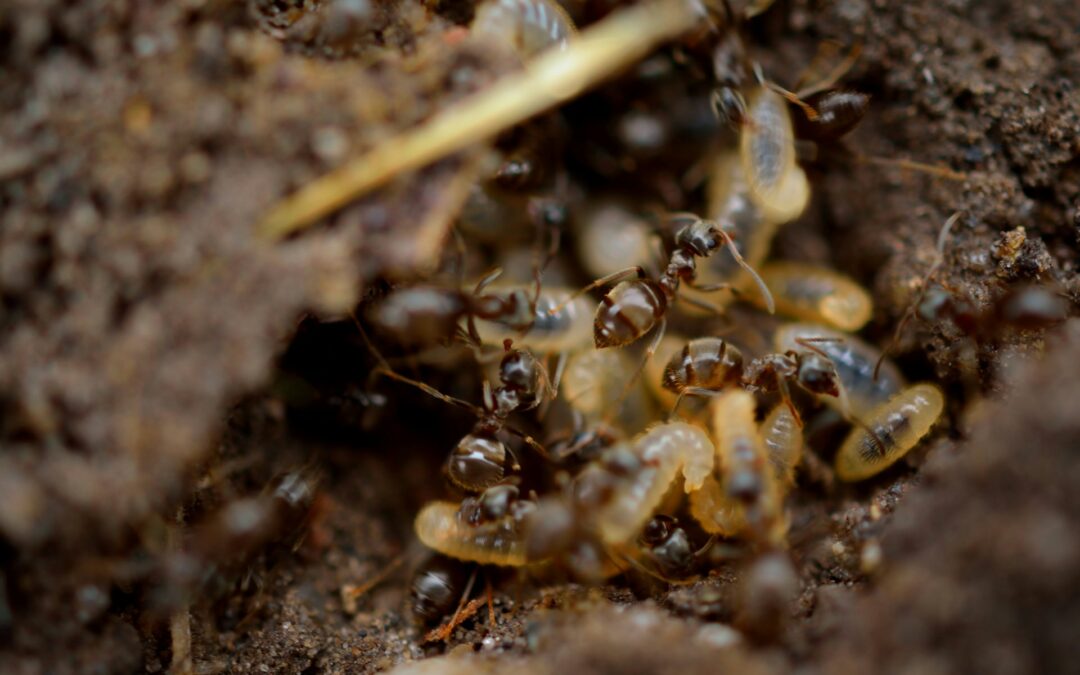
Discerning between termites and ants can be tricky but is vital for pest control. This article dives into the differences between termites and other pests like ants, clarifying how to spot and handle these critters. Expect insights on physical traits, nesting habits, and more to distinguish and manage these pests in your home effectively.
Key Takeaways
- Termites and ants can be distinguished by their physical appearance, behavior, diet, and habitat. Termites have wider bodies, a diet of cellulose-based materials, sophisticated caste systems, and live underground or within wooden structures.
- Signs of termite and ant damage differ; termites cause wood deterioration and build mud tubes, while ants produce frass and boreholes in wood, and actively infesting insects or damage evidence should prompt contacting pest control specialists.
- Professional pest control is advisable when dealing with infestations. Experts can identify the type of pest, assess the extent of damage, and suggest a tailored treatment, which is vital given the potentially expensive costs of untreated termite damage.
Termite and Ant Distinctions: Key Factors
At first glance, termites and ants may appear similar, yet they display several significant differences. These differences encompass the following:
- Physical appearance
- Behavior
- Diet
- Habitat
These factors are essential to correctly identifying and effectively managing these pests.
Appearance Variations
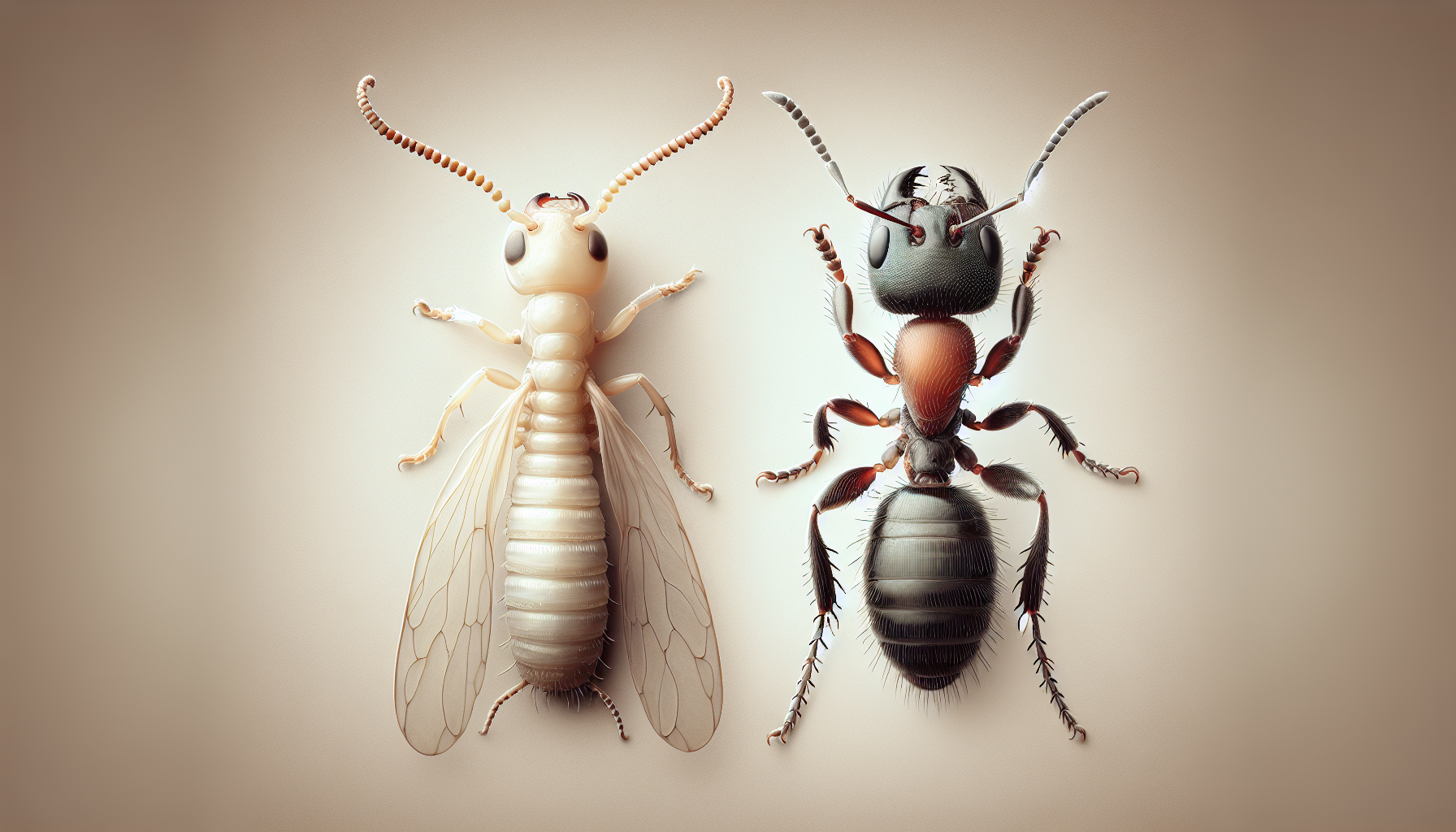
Ants and termites may appear alike to the untrained eye, but their differences become evident upon closer examination. Ants have a pinched waist, defining their bodies, while termites have wider, almost rectangular bodies without narrowing in the center. This helps distinguish easily between the two insects. Furthermore, their wing and antennae structures differ. Winged termites have equal-length wings that are longer than their bodies, whereas flying ants have a shorter pair of hind wings, and their wings appear more proportional to their body size. In addition, ants possess straight antennae, setting them apart from termites.
Color-wise, termites generally exhibit lighter hues, ranging from translucent to white, as they avoid light. This starkly contrasts with the darker coloration of ants, which can range from dark red to black, unlike termites. Furthermore, termites have straight, beaded antennae, unlike ants’ bent or elbowed antennae.
Behavioral Patterns
Each termite colony operates under a sophisticated caste system, with distinct roles such as:
- workers
- soldiers
- reproductive alates
- Queen
In contrast, ants with bent antennae create satellite nests, which can be located indoors. These nests serve as a new habitat for the queen and her offspring away from the main outdoor nest.
Both termites and ants exhibit fascinating behavior during the swarming season. They produce swarmers, including ant swarmers, to establish new colonies, focusing on expanding their presence. Grasping these behavioral patterns is instrumental in formulating strategies to curb their spread and minimize the resulting damage.
Dietary Preferences
Termites feed primarily on cellulose-based materials found in wood, plants, and other materials. This is essential for the decomposition of dead trees and plants in nature. Inside a termite’s stomach, bacteria and protozoa produce enzymes that help break down cellulose into sugar for nutrition. Some termite species even prefer wood that has been pre-decomposed by fungi, making digestion easier. Worker termites distribute the digested cellulose-turned-sugar to other members of their colonies, ensuring everyone is nourished.
On the other hand, ants maintain an omnivorous diet, consuming various foods. They eat nearly anything, including:
- nectar
- seeds
- other insects
- mainly food debris found around human habitations
We can restrict their food sources and manage their population growth by comprehending their dietary preferences.
Habitat Contrasts
One of the critical differences between termites and ants lies in their preferred habitats. Termites are often found in:
- Decaying trees
- Stumps
- Wood debris
- Lumber Additionally, they are known to infest the wooden components of a structure. They often infest:
- Basements or cellars
- Structural timbers
- Wood posts
- Steps
- Door frames
- Trim that are in contact with earth or concrete floors They live either underground or within the wood structures they consume, causing more destruction due to their wood-eating behaviors.
Conversely, carpenter ants are one example of an ant species dwelling in wood and wooden structures. They create their nests in these types of materials. They can nest outdoors in moist or decaying wood or indoors in areas with excess moisture, such as crawl spaces. Identifying these habitat preferences assists in early pest detection and efficient control measures.
Termite and Ant Damage: What to Look For
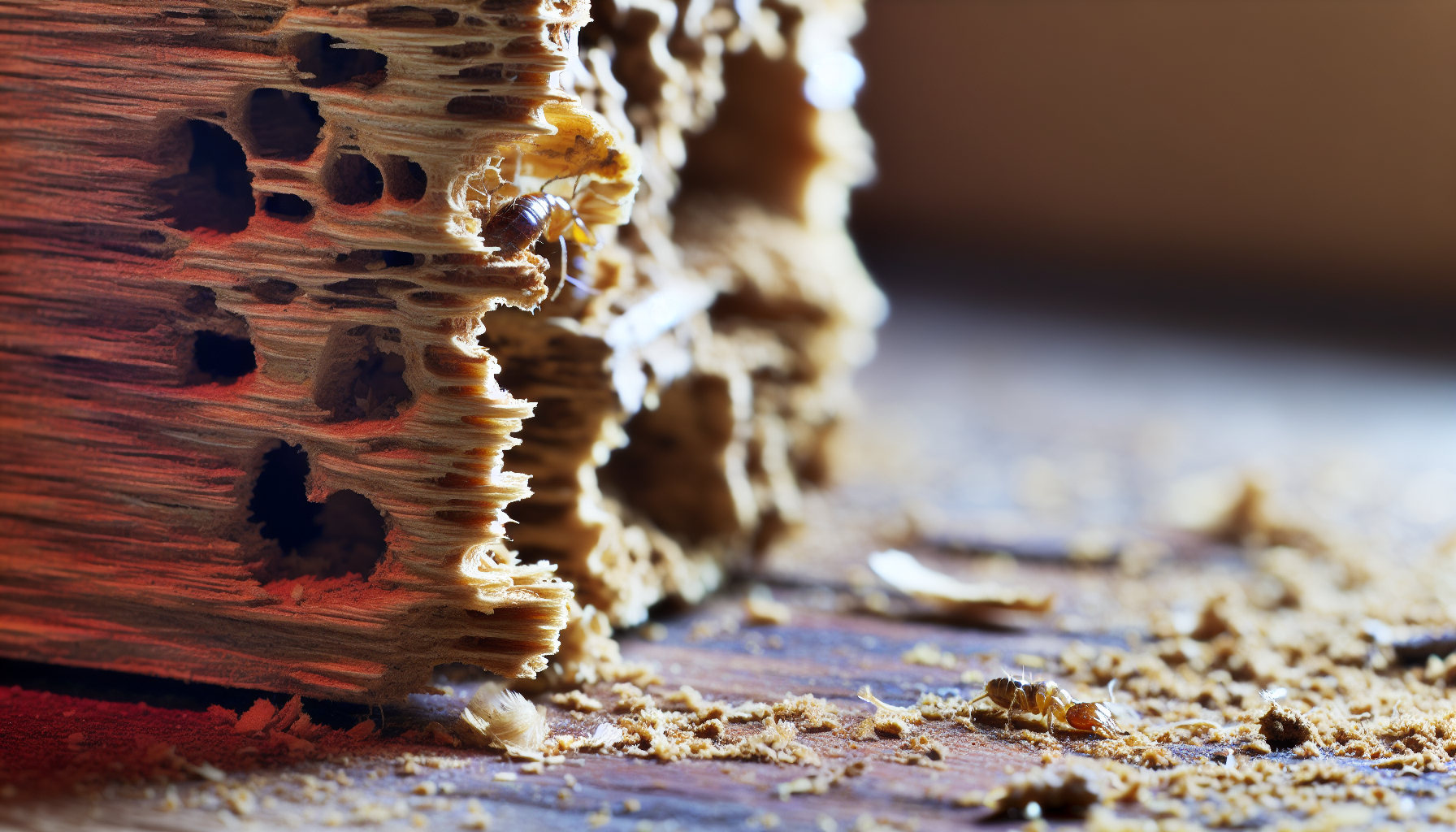
Identifying the signs of damage caused by termites and ants is a critical step toward efficient pest control. Both can cause structural damages that are often overlooked until they reach advanced stages.
We shall now explore the specific signs of damage caused by these pests.
Wood Damage Indicators
Termites primarily consume wood, paper, and other cellulose materials, causing significant structural damage to homes. Signs of termite damage in wooden structures can include discolored or drooping drywall, peeling paint that resembles water damage, hollow sounds when wood is tapped, buckling floorboards, squeaky floors, and maze-like patterns in wooden items.
The type of damage also depends on the species of termite. Here are some examples:
- Drywood termites target drywood structures
- Subterranean termites prefer wood in contact with soil and moisture
- Carpenter ants do not eat wood but boreholes and build tunnels, often preferring softer or rotting material.
Frass and Mud Tubes
Subterranean termites build mud tubes, structures made of soil, wood, and debris, on exterior walls from the ground to their food source. These tubes serve as protective tunnels, maintaining specific moisture levels within their colony and protecting against predators.
On the other hand, carpenter ants produce frass, a mixture of wood shavings and fecal matter. Frass can be detected by looking for piles of wood shavings near wooden items like baseboards and window sills. Frass from carpenter ants varies and is less uniform than termite frass, particularly from dry wood termites, which are typically more uniform in size and shape.
Visible Insects
One sure sign of an active termite colony is the presence of flying termite swarms, mainly after they shed their wings. Visible termite exit holes from which swarmers emerge can also indicate termite activity in the property. Worker termites, however, are seldom seen as they avoid light and are lighter in color compared to worker ants, which are often seen foraging openly and are reddish or dark-colored.
Carpenter ants, on the other hand, are more likely to be active when temperatures are above 45 to 50 degrees Fahrenheit, with heightened visibility at night or early morning. An active infestation might be indicated by giant black ants, including winged swarmers, seen inside the house, emerging from walls and ceilings. The shed wings from swarmers near window sills and baseboards can also indicate an ant infestation. Upon detecting these visible signs, it is advisable to contact pest control experts to prevent further damage.
Life Cycle Comparisons: Termites vs. Ants
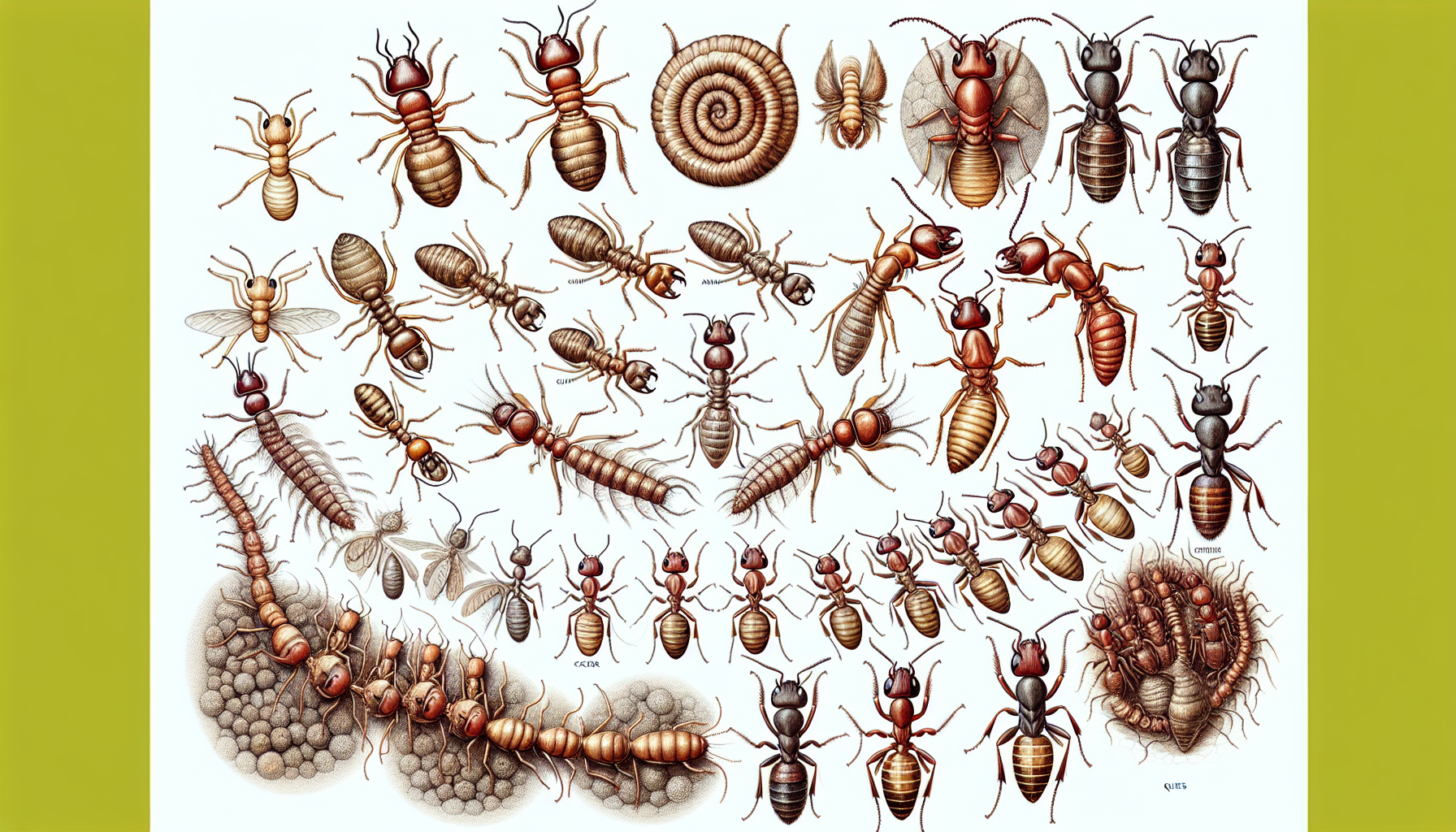
A thorough understanding of the life cycles of termites and ants is vital for successful pest control. Both have unique life cycles that determine their behavior, reproduction, and lifespan, affecting the severity of their infestations and the strategies for managing them.
Development Stages
Termites undergo five stages of development:
- Egg
- Nymph (larvae)
- Worker/soldier
- Reproductive
- Adult
After hatching, termite eggs develop into nymphs, which undergo several molts before adulthood.
Ants go through four stages of development, including:
- Egg
- Larva
- Pupa
- Adult
This process is similar to the development cycle of other insects. The differences in their development stages affect their behavior and colonizing strategies.
Reproductive Cycles
During the reproductive phase, fertile termites and ants fly during warmer months to mate. After mating, they lose their wings, and both male and female partners live on and continue to expand their new colonies, showcasing how termites survive alongside ants.
Grasping these reproductive cycles is critical to forecasting and preventing pest infestations. For instance, the appearance of winged termites or ants in and around your home could indicate an active colony nearby.
Lifespan Differences
Lifespan is another critical difference between termites and ants. Termites typically have a longer lifespan, which can indicate longer-term infestations. The termite queen can live for more than 30 years, with an average lifespan of 10 to 12 years for many species. Some African termite queen species may even live up to 50 years. Worker and soldier termites typically live between one to two years.
In contrast, within the ant colony:
- Queen ants live the longest, typically around ten years, with some species living nearly three decades.
- Worker ants live for several months.
- Male ants only survive a few days after mating.
Appreciating these lifespan differences can shed light on the persistence of these pests and the potential duration of infestations.
Health Risks and Prevention Strategies
While termites and ants pose different health risks, both can cause significant problems if not properly managed. Some of the health risks associated with these pests include:
- Triggering allergies and asthma
- Causing painful bites or stings
- Spreading diseases
- Contaminating food and surfaces with bacteria
It is essential to take appropriate measures to control and prevent infestations of termites and ants to protect your health and well-being.
Health Concerns
Termites can have several adverse effects on human health, including:
- Triggering allergies and asthma in sensitive individuals by releasing particles into the air, including less stable structures, and promoting mold growth
- Introducing bacteria into the wound through termite bites increases the risk of infection
- Carrying bacteria and fungi in their colonies, potentially causing asthma and bronchitis
It is important to take necessary precautions to prevent termite infestations and protect your health from their consequences.
On the other hand, ant bites can cause discomfort and potentially lead to skin irritation or infection. Ants can also contaminate food with pathogens such as salmonella. These health risks underscore the urgency for swift and effective pest control measures.
Termite Prevention Tips

Preventing termite infestations involves several strategies. These include:
- Sealing cracks, crevices, and joints in exterior wood
- Installing bug screens over attic and foundation vents
- Caulking gaps
- Using plastic storage boxes
These measures can help prevent termites from invading your home.
Addressing moisture issues and limiting wood-to-ground contact can create a less attractive environment for termites. Regular termite inspections prevent colonies from establishing themselves in your home. Implementing these preventative measures can save homeowners significant money in the long term.
Ant Prevention Measures
Ant prevention involves maintaining cleanliness, eliminating water sources, and sealing entry points. Wiping down counters, sweeping floors, and removing food residues can help prevent ant infestations. It’s also essential to regularly clean and dry pet feeding areas and store dry pet food in sealed plastic containers.
To prevent ants from establishing colonies in your home, you can take the following steps:
- Eliminate water sources by repairing leaky pipes and employing dehumidifiers in damp areas.
- Seal cracks and openings, especially where utility pipes enter.
- Trim vegetation that touches the house to create a physical barrier.
These measures can effectively deter diet ants from entering your home.
Professional Pest Control: When to Call NYC Extermination
While prevention is the first defense line, professional intervention sometimes becomes necessary. NYC Extermination can accurately identify the type of pest infestation and devise effective treatment and prevention strategies.
Identifying Infestations
Correctly identifying the pest type is the preliminary step toward effective pest control. Pest control experts possess the necessary knowledge and tools to ascertain whether the infestation involves termites, ants, or both. They can also identify the specific species you’re dealing with, which is crucial for planning a practical treatment approach.
Cost and Damage Considerations

The cost of termite treatment can vary widely, depending on several factors, such as the size of your home, the type and number of treatments, and the size of the infestation. It’s also worth noting that termites cause Americans more than $5 billion in damage each year, and most insurance plans do not cover the damage.
Termite inspections, which are essential for detecting termites, can cost between $85 and $300. While these costs may seem steep, they are a necessary investment in protecting your property from significant structural damage.
Summary
Understanding the distinctions between termites and ants is crucial for effective pest management. From their physical appearances and behaviors to their dietary preferences and habitats, these pests exhibit several differences influencing how they should be controlled. Recognizing the signs of infestations and understanding their life cycles can inform effective prevention and control measures. While DIY measures can help, sometimes professional pest control becomes necessary. By being proactive and vigilant, homeowners can protect their homes and health from these pesky invaders.
Frequently Asked Questions
How do ants differ from other insects?
Ants differ from other insects by having three distinct body regions—gaster, thorax, and head—and connecting segments called pedicels between the abdomen and thorax. They also have elbowed antennae, lack wings on workers, and narrow waists, which distinguish them from most other insects.
How can you tell the difference between termites?
You can tell the difference between termites by examining the frass: sawdust or sand indicates dry wood termites, while pencil shavings suggest carpenter ants. Look for mud tunnels and dropped alate wings to identify subterranean termites.
How can I tell if I have a termite or ant infestation?
You may have a termite or ant infestation if you notice discolored or drooping drywall, peeling paint, hollow sounds when tapping wood, or frass and mud tubes. Look for visible insects like flying termite swarms or giant black ants.
What are the differences in the life cycles of termites and ants?
The main difference in the life cycles of termites and ants is their number of development stages. Termites have five stages, while ants have four.
What health risks do termites and ants pose?
Termites can trigger allergies and asthma, while ant bites can cause discomfort and potential skin irritation or infection from bacteria in the wound. Additionally, both termites and ants can contaminate food with pathogens.
Featured Photo by Morten Jakob Pedersen on Unsplash
Recent Comments