

Is it suspicious your home might be hosting termites? Recognizing the signs of a termite infestation can be the difference between minor repairs and major headaches. This article is your quick guide to identifying the evidence of termites, from their distinctive damage signs to behavioral traces, so that you can take action now.
Key Takeaways
- Winged termite swarmers and discarded wings near entry points are early indications of an infestation, and they are often confused with flying ants.
- Evidence of silent termite activity includes exit holes with frass, distinctive mud tubes for subterranean termites, and warped wood due to moisture and damage.
- Regular termite inspections are crucial for early detection and prevention, as termites can cause extensive, costly damage to homes not typically covered by insurance.
Winged Invaders: The Arrival of Termite Swarmers

Has your home become a landing zone for winged insects? These aren’t just pests; they’re termite swarmers, the scouts of termite colonies on a mission to establish new strongholds within your home’s foundation. When these mature termites take flight, it’s a clear, albeit alarming, sign that a termite infestation is not just a possibility—it’s likely already underway.
The deceptive calm after the swarm belies the danger as these invaders shed their wings, leaving telltale signs of a termite problem that could soon spiral out of control.
Identifying Termite Swarmers
Distinguishing these culprits from benign houseguests is crucial. With their straight antennae and uniform waist, termite swarmers are often mistaken for their distant relatives, the flying ants. But take a closer look, and you’ll notice the delicate wings of these termite invaders, all of equal size, a feature that sets them apart and hints at their actual, destructive nature.
Whereas flying ants sport uneven wings and elbowed antennae, flying termites, known as termite swarmers, are a uniform squad of destroyers, ready to pair up and colonize.
Seasonal Patterns of Termite Swarms
Termite swarms are not random events but orchestrated invasions that follow the rhythms of nature. In termites swarm spring’s embrace, as temperature, termites swarm, often spurred into action by rain or sudden shifts in the weather. These patterns are a testament to the termites’ sensitivity to their environment, a trait that ensures their survival and proliferation.
In regions like Florida, the timing of these swarms can vary across different termite species, with the majority of the activity concentrated in the warmer, rainier months.
Discarded Wings: A Clue to Termite Activity
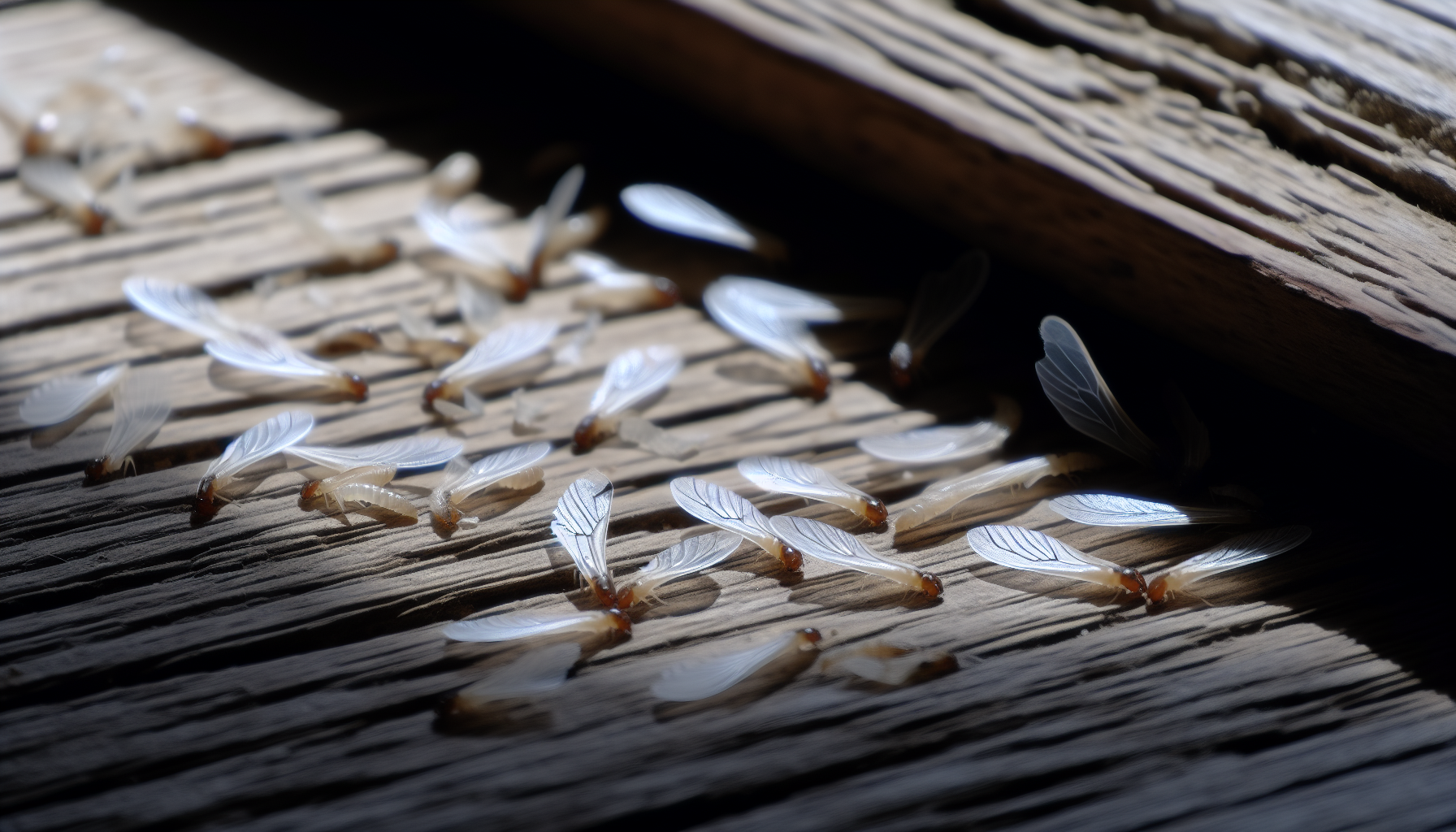
The aftermath of a termite swarm is more than just an annoyance; it’s a red flag. Termite wings, mainly when found near points of entry such as windows, are not just debris—they’re a harbinger of an active termite infestation. These remnants are often discovered in the wake of the swarmers’ quest to find a new home base, cluttering your sills and signaling that the termites have found theirs.
Attracted to the light, these discarded wings may accumulate near windows, a glaring sign that your home has become a target for these wood-feeding invaders.
Silent Saboteurs: Uncovering Termite Exit Holes and Droppings
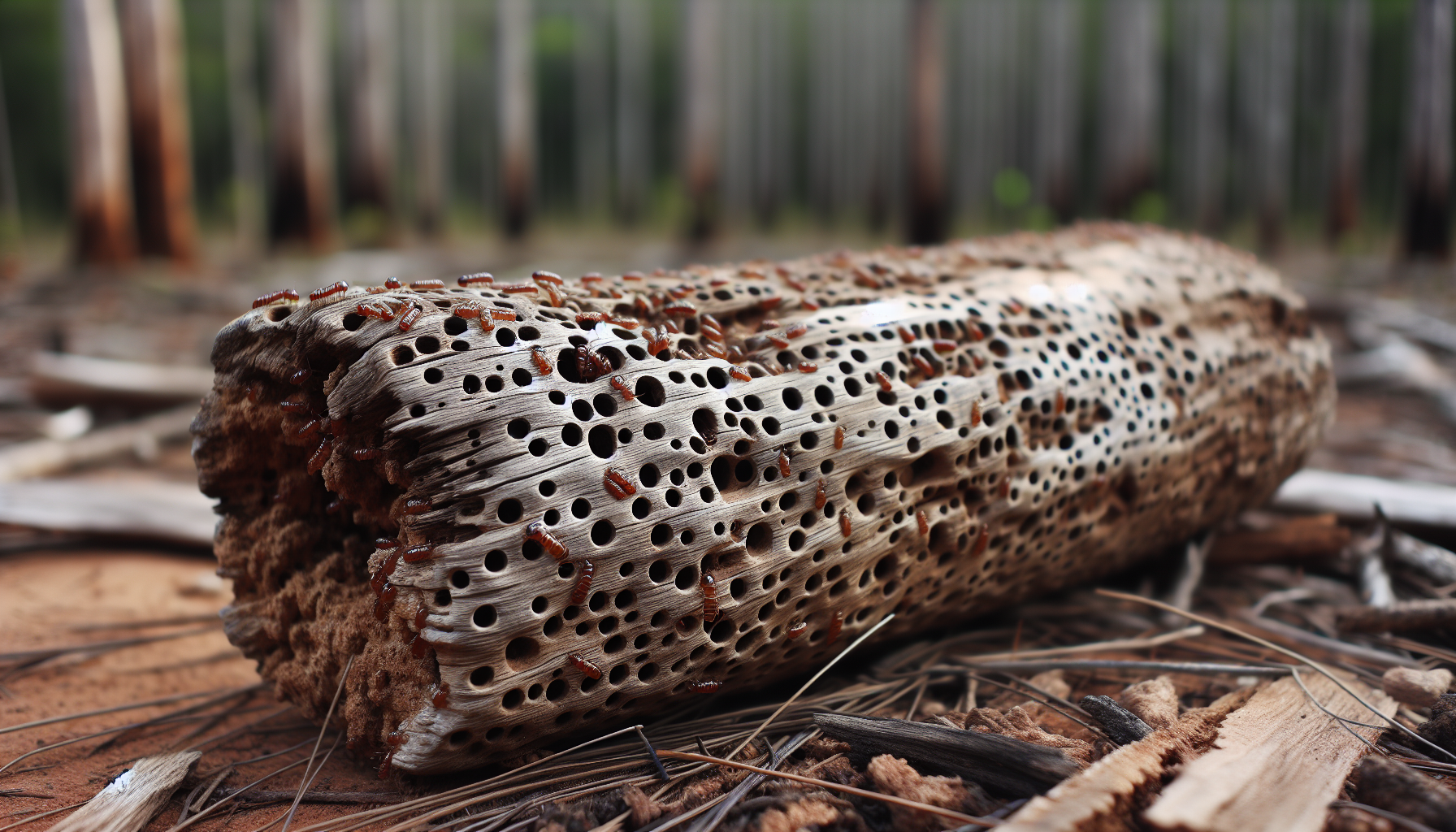
It’s the minor signs that often reveal the most significant problems. Tiny, round termite exit holes, so easily overlooked, are a telltale sign of swarmers leaving the nest to begin their destructive work. These pinholes, sometimes filled with a brown, feces-based paste, are evidence of nymphs trying to conceal their activity. But it’s not just the holes that betray their presence; the termite droppings, or frass, accumulate as a cryptic clue to their covert operations. These wood-colored pellets, which might be mistaken for innocuous sawdust, are a clear indicator of termites, particularly the dry wood variety.
Difference Between Drywood and Subterranean Termite Droppings
Drywood termite droppings are unique in their appearance, resembling pepper or sand, and clearly indicate their presence in wooden structures. Subterranean termites, on the other hand, use their droppings to construct and line their mud tubes, meaning you won’t find these droppings accumulating visibly. This behavioral difference between drywood termites and subterranean termite species is critical to note, as it affects how you might detect the presence of these different termite species within your home.
Mud Tubes: The Highways for Subterranean Termites
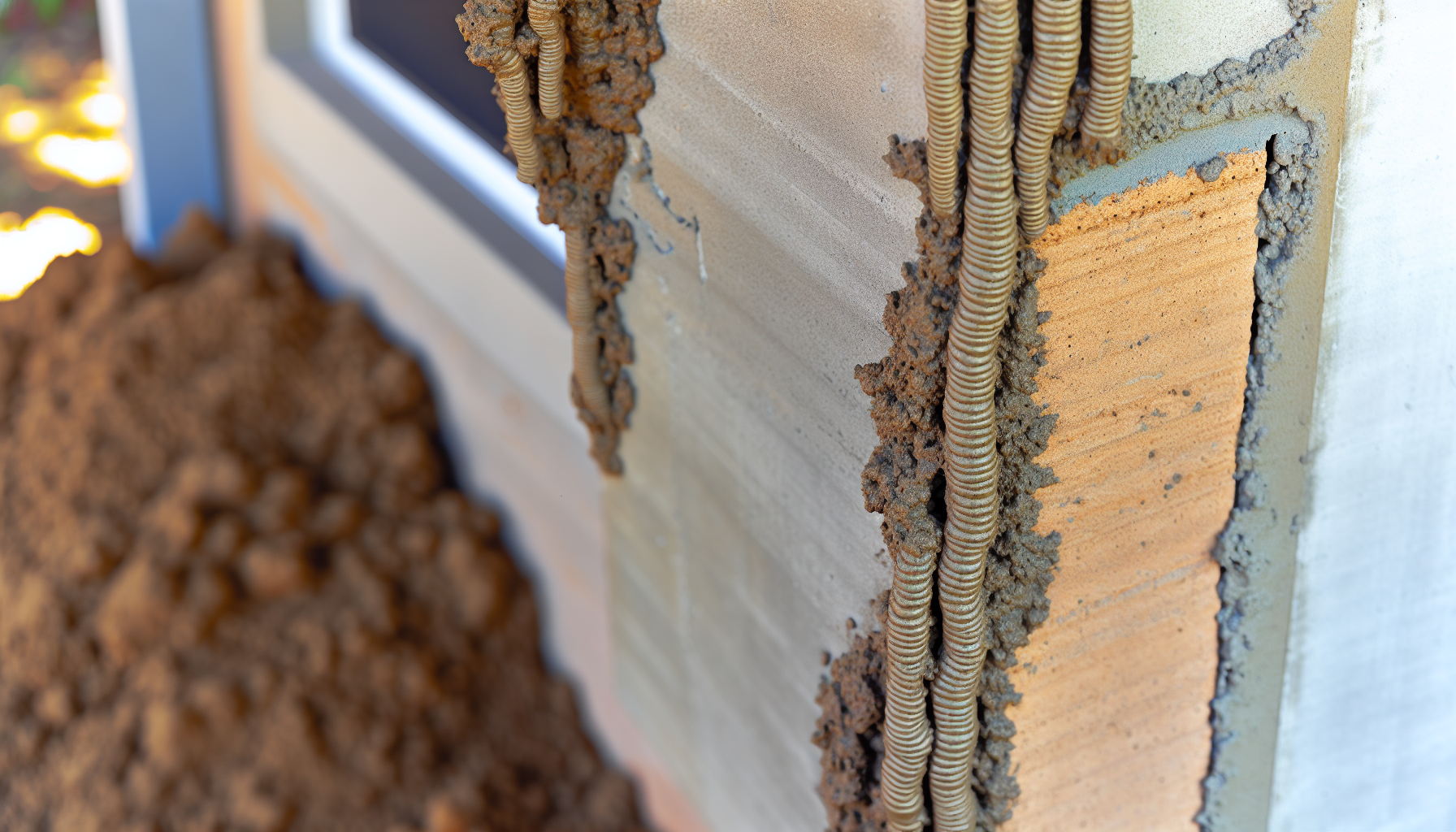
Pencil-sized mud tubes snaking along your home’s foundation are more than just unsightly; they’re the superhighways for subterranean termites, providing them with the moisture and protection they desperately require. These structures come in various forms, with some as direct connections to food sources and others as exploratory paths searching for new wood to consume. Spotting these mud tubes is an unmistakable sign of an active subterranean termite infestation that requires immediate attention to prevent further termite damage.
Structural Changes: Warped Doors and Stiff Windows
The integrity of our homes is often taken for granted until something goes awry. When doors and windows become difficult to operate, it’s a symptom that can’t be ignored—it might just be termite damage. The moisture termites produce as they feast on wood can warp door and window frames, leading to a telltale stiffness that suggests a deeper problem.
If this warping occurs without external factors, such as weather changes, it strongly indicates that termites might be dining within your walls.
The Sound of Infestation: Noises Within the Walls
Your home’s silence may be hiding a cacophony of destruction. Termites are not as silent as you might think; their movements and feeding habits within your walls create rustling, rattling, and clicking noises that can be detected if you listen closely. Worker termites audibly munch on wood, while soldier termites make clicking sounds to signal danger to their colony. As termites eat away at the structure, the damage can become extensive if left unchecked.
These subtle early warning signs of termite activity might require a keen ear or specialized equipment, such as a stethoscope, to amplify and precisely locate the invaders. Being aware of these signs can help you detect and address the issue before it becomes a bigger problem.
Wood Damage: When Your Home Sounds Hollow
The sound of solidity in your home’s wood may be a comforting thought, but what if it echoes with hollowness instead? Termites devour wood from the inside, leaving behind a façade that may seem intact but is anything but. A simple tap on the wood can reveal the extensive mazes and grooves termites leave, compromising the wood’s strength and stability.
If tapping on your walls or floors elicits a hollow or papery response, it’s a clear sign that termites have been at work, not for your home’s benefit.
Bubbling and Peeling: Paint Distress Signals
A home’s walls are its canvas, but when the paint begins to bubble and peel, it’s more than just an aesthetic concern—it may be a distress signal from an unseen termite infestation. The moisture from termite nests can seep through wood and cause paint to deteriorate, often mistaken for mere water damage.
This kind of paint degradation, especially near wood, should prompt a closer inspection rather than a simple touch-up, as it may conceal a thriving termite colony.
Routine Checks: The Importance of Regular Termite Inspections

The termite threat to our homes is silent but costly. Americans spend over $5 billion annually on termite damage—damage that is often not covered by insurance. Considering that a medium-sized termite colony can consume a pound of wood daily, routine termite inspections become not just advisable but essential for the longevity of your home.
These inspections, typically a minor expense compared to the cost of repairing termite damage, serve as a proactive measure against an otherwise invisible adversary. A termite inspection can help identify potential issues before they escalate, saving homeowners time and money.
Summary
As we’ve explored the signs and signals of termite infestation, it’s clear that awareness and vigilance are our best tools for protecting our homes. From winged invaders to the silent sabotage of wood, termites are formidable foes that demand our attention. Remember, the cost of ignorance can be substantial, but the power of knowledge can save your home from becoming a feast for these persistent pests.
Frequently Asked Questions
How do I know if I have a termite infestation?
You can determine if you have a termite infestation by looking for termite swarmers, mud shelter tubes, and termite damage in your building. It’s essential to address these signs promptly to prevent further damage.
What does an active termite infestation look like?
An active subterranean termite infestation may cause blistering on walls and floors, resembling water damage, so it is crucial to contact pest control professionals for an accurate assessment.
How long does it take for termites to infest a house?
It can take three to five years for a termite colony’s damage to become visible so that they can do massive damage in as little as six months.
How does a termite infestation start?
A termite infestation can start when termites find a point of entry into your home, such as through wood that comes into contact with the structure or cracks and gaps in the foundation or siding. These provide access for termites to move indoors and start colonies.
What should I do if I find termite swarmers in my home?
If you find termite swarmers in your home, collect a sample and contact NYC Extermination for a professional inspection and identification to prevent a full-blown infestation. Taking prompt action is crucial.
Recent Comments